Solar Battery Storage Price: What Homeowners Should Expect
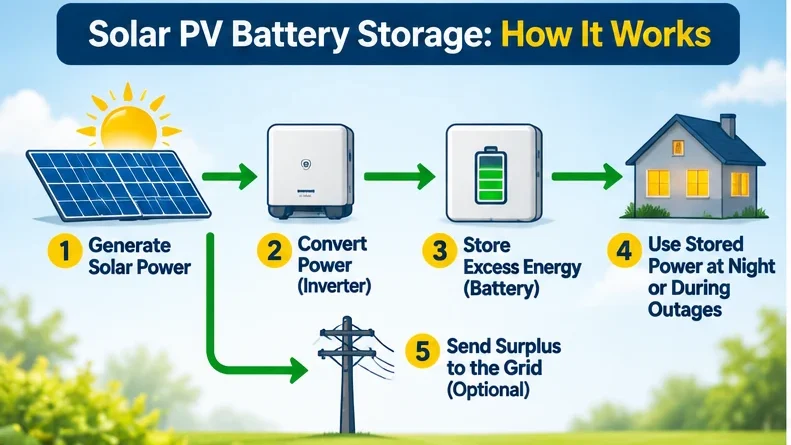
Adding a solar battery to your home can give you more control over how and when you use the electricity generated by your solar panels. Instead of sending all surplus electricity to the grid, you can store some of it and use it later, including during the evening or a power outage.
However, battery storage adds to the cost of a residential solar installation. The final price depends on the battery’s capacity, brand, installation requirements, inverter compatibility and the amount of backup power you want.
So, how much should homeowners expect to pay for solar battery storage in 2026?
EnergySage reports an average installed price of approximately $15,647 for a typical 13.5 kWh home battery installation, before available incentives. Actual prices vary considerably by location, equipment and installer.
In this guide, we’ll explore solar battery storage prices, compare different battery capacities, explain installation costs and identify the factors homeowners should consider before investing.
Key Takeaways
- A typical 13.5 kWh home battery installation costs approximately $15,647 before incentives, according to EnergySage’s 2026 marketplace data.
- Battery prices vary by capacity, manufacturer, chemistry, inverter compatibility and installation requirements.
- A larger battery generally costs more, but the relationship between capacity and total price is not always linear.
- Adding battery storage to an existing solar system may require additional electrical work or equipment.
- Whole-home backup usually requires more storage and additional electrical configuration than backup for essential appliances.
- The federal Residential Clean Energy Credit is no longer available for qualifying expenditures made after December 31, 2025.
- Compare complete installed quotes rather than judging a battery by its advertised equipment price alone.
1. How Much Does Solar Battery Storage Cost in 2026?
The cost of solar battery storage depends primarily on how much electricity you want to store and what you expect the battery to do.
A battery intended to power essential appliances during short outages may be considerably smaller than a system designed to support most of a household’s electricity needs.
According to EnergySage’s July 2026 marketplace analysis, the average installed cost of a typical 13.5 kWh home battery is approximately $15,647 before incentives.
This is an installed-price benchmark, not simply the retail price of the battery equipment.
Average solar battery storage price
The following table illustrates how costs might scale with battery capacity using the EnergySage benchmark.
| Battery capacity | Illustrative installed cost |
|---|---|
| 5 kWh | $5,795 |
| 10 kWh | $11,590 |
| 13.5 kWh | $15,647 |
| 20 kWh | $23,180 |
| 27 kWh | $31,293 |
These examples use approximately $1,159 per kWh, calculated from the $15,647 benchmark divided by 13.5 kWh.
Important: These are illustrative calculations, not published average prices for every battery size. Actual installation costs do not necessarily increase at a constant price per kWh. Fixed electrical work, equipment configuration and installation complexity can make smaller and larger systems more expensive or economical per unit of storage.
What does a typical home battery cost?
A 13.5 kWh battery is a useful reference point for homeowners comparing residential storage systems.
EnergySage’s marketplace data puts a typical installation at approximately $15,647 before incentives.
However, your actual quote may be higher or lower depending on the battery brand, location, installation requirements and backup configuration.
For a more accurate estimate, compare quotes based on the same usable storage capacity and installation scope.

2. What Does Solar Battery Storage Capacity Mean?
Before comparing prices, it helps to understand how battery capacity is measured.
Battery storage capacity is generally expressed in kilowatt-hours (kWh). It tells you how much energy a battery can store.
For example:
- A 5 kWh battery stores less energy than a 10 kWh battery.
- A 10 kWh battery stores less energy than a 20 kWh battery.
- A larger battery can potentially supply household appliances for longer, depending on electricity consumption.
However, storage capacity is only one part of battery performance.
Usable capacity versus total capacity
Not all of a battery’s stated capacity may be available for everyday use.
Manufacturers may distinguish between total capacity and usable capacity. The usable figure represents the energy available to the household under the manufacturer’s operating limits.
When comparing batteries, check the usable capacity rather than relying only on the headline capacity.
Power output matters too
Capacity is measured in kWh, while power output is measured in kilowatts (kW).
These measurements describe different things:
- Capacity (kWh): How much energy the battery can store.
- Power (kW): How quickly the battery can supply electricity.
A battery may have sufficient capacity to run appliances for several hours but may not have enough power output to operate several high-demand appliances simultaneously.
This is particularly important when planning backup power for air conditioning, electric ovens, pumps or other high-load equipment.
For more information, see our guide to Solar Battery Storage Capacity.
3. What Factors Affect Solar Battery Storage Price?
Two homeowners looking at batteries with similar storage capacity may receive very different installation quotes.
Several factors influence the total price.
Battery capacity
Capacity is one of the main cost factors.
A larger battery generally requires more cells and materials, increasing the equipment cost.
However, the final installed price also depends on the supporting equipment and installation work.
Battery brand and technology
Different manufacturers offer different battery designs, chemistry, features and warranty terms.
Lithium-ion batteries are widely used in residential energy storage. Two common types are:
- Lithium iron phosphate (LFP).
- Nickel manganese cobalt (NMC).
LFP batteries are often selected for their thermal stability and cycle-life characteristics. NMC batteries offer different energy-density and product-design characteristics.
The best option depends on the application, available products, manufacturer specifications and installation requirements.
Compare warranties, usable capacity, power output and operating limits rather than choosing solely by brand name.
Inverter compatibility
A battery must be compatible with the solar system’s electrical configuration.
Some batteries use integrated inverter technology, while others require separate equipment.
If you already have solar panels, your installer must determine whether your existing inverter can support the proposed battery.
In some cases, additional equipment or inverter replacement may be necessary.
Installation labor and electrical work
Installation expenses can include:
- Electrical wiring.
- Battery mounting.
- Inverter or control equipment.
- Backup circuits.
- Critical-load panels.
- Electrical upgrades.
- Permits and inspections.
- System configuration and commissioning.
The complexity of the installation can have a significant effect on the final price.
Location and installer availability
Prices vary between states and local markets.
Differences in labor rates, permitting requirements, installer experience and equipment availability can all influence the final quote.
For example, EnergySage’s November 2026 New York data reports an average installed storage cost of approximately $14,926 for a 13 kWh system, illustrating that regional figures can differ from nationwide marketplace benchmarks.
That figure is specific to New York and should not be treated as a nationwide price.
4. How Much Does It Cost to Add a Battery to an Existing Solar System?
Homeowners who already have rooftop solar may want to add battery storage later.
This is commonly called a solar battery retrofit.
The cost depends on how the existing solar installation is configured.
AC-coupled battery systems
An AC-coupled battery connects to the home’s alternating-current electrical system.
This arrangement can be suitable for some existing solar installations because it may allow the battery to be added without replacing the original solar inverter.
However, the system may require additional conversion equipment and electrical work.
DC-coupled battery systems
A DC-coupled battery connects on the direct-current side of the solar installation.
This configuration can be efficient in suitable system designs, particularly when solar panels and battery storage are installed together.
However, compatibility with existing equipment must be assessed carefully.
Why retrofitting can cost more
Adding a battery to an existing installation may require:
- An additional inverter or compatible power electronics.
- Electrical panel modifications.
- New wiring.
- Backup circuits.
- Additional installation labor.
- Changes to system controls.
A battery installed alongside a new solar system may allow the installer to plan the entire electrical configuration from the beginning.
That does not mean retrofitting is always more expensive. The result depends on the equipment already installed and the work required.
Ask your installer to compare the cost of adding a battery to your current system with the cost of a complete integrated installation.
5. How Much Does Whole-Home Battery Backup Cost?
The price of battery storage also depends on how much of your home you want to power during an outage.
There is a significant difference between backing up a few essential appliances and supplying electricity to most of a household.
Essential-load backup
An essential-load backup system is designed to supply selected circuits or appliances.
These may include:
- Refrigerator.
- Selected lighting.
- Internet equipment.
- Phone charging.
- Essential medical equipment, where the system is properly designed for that purpose.
- Certain small household appliances.
A smaller battery may be sufficient, depending on how much electricity these appliances consume and how long you need backup power.
Whole-home backup
Whole-home backup aims to supply a much larger portion of the property’s electricity demand.
This may require:
- Multiple batteries.
- Higher power output.
- Additional electrical equipment.
- A suitable backup configuration.
- More extensive installation work.
Large appliances such as air conditioning systems, electric water heaters and electric ovens can consume substantial amounts of electricity.
A system designed for whole-home backup will therefore generally require more capacity and power than one intended for essential loads.
How much does backup configuration affect the price?
EnergySage’s 2026 emergency-backup guidance provides broad illustrative estimates:
| Backup goal | Typical configuration | Illustrative installed cost |
|---|---|---|
| Essential loads | One battery, approximately 10–13.5 kWh | $5,000–$18,000 |
| Whole-home backup | Two to three batteries | $24,000–$40,000 |
| Extensive off-grid independence | Eight to twelve or more batteries | $100,000+ |
These are broad estimates, not guaranteed prices or recommendations for every home. Actual requirements depend on household consumption, equipment, system design and the length of backup desired.
6. Are There Federal Tax Credits or Incentives for Solar Batteries in 2026?
Incentives can influence the total cost of a home battery installation.
However, homeowners need to distinguish between federal tax credits, state programs, utility rebates and other local incentives.
Important: The federal Residential Clean Energy Credit has ended for new 2026 expenditures
The federal Residential Clean Energy Credit under Section 25D previously allowed eligible homeowners to claim a 30% tax credit for qualifying battery storage and other clean-energy expenditures.
Following legislative changes in 2025, the credit is no longer available for qualifying expenditures made after December 31, 2025.
The IRS confirms that the credit does not apply to property placed in service after that date and that installation completed after December 31, 2025 does not qualify simply because payment was made earlier.
Homeowners planning a new battery installation in 2026 should not automatically deduct 30% from their expected cost.
For the official information, see:
IRS – Residential Clean Energy Credit
State and local battery incentives
Some homeowners may still qualify for state, local or utility-sponsored programs.
Depending on where you live, these may include:
- State battery rebates.
- Utility energy-storage incentives.
- Demand-response programs.
- Local energy resilience initiatives.
- Other state-supported storage programs.
Program availability, eligibility and funding can change.
Check your state energy agency and electricity provider before including an incentive in your budget.
7. Is Solar Battery Storage Worth the Price?
A solar battery can provide useful benefits, but it is not automatically the best financial decision for every homeowner.
Whether the investment is worthwhile depends on how you use electricity, your utility’s rates and your reasons for wanting storage.
When a solar battery may be worthwhile
Battery storage may be attractive when:
- Your area experiences frequent power outages.
- You want backup electricity for essential appliances.
- Your utility has time-of-use electricity pricing.
- Exported solar electricity receives relatively low compensation.
- You want to use more of your own solar-generated electricity.
- Your household has suitable solar generation and storage requirements.
When a battery may be less attractive
A battery may be harder to justify financially when:
- Your electricity supply is reliable.
- Your utility compensates exported electricity favorably.
- Your household uses little electricity in the evening.
- Battery installation costs are high.
- Your backup requirements are limited.
- The battery would rarely be used.
Consider the value of backup power separately from financial savings.
Some homeowners are willing to pay more for resilience during outages, even if the battery does not produce the shortest financial payback period.
8. How to Compare Solar Battery Installation Quotes
Comparing battery quotes is important because two systems with similar advertised capacities may have different capabilities and installation requirements.
Rather than comparing only the final price, review the following details.
Compare usable storage capacity
Check the usable capacity in kWh.
Do not assume that two batteries advertised at the same nominal capacity provide exactly the same amount of usable energy.
Compare power output
Check the continuous power rating and any available peak or surge output.
This helps determine which appliances can operate simultaneously.
Compare battery warranties
Review:
- Warranty duration.
- Guaranteed remaining capacity.
- Cycle or energy-throughput limits.
- Operating conditions.
- Product support.
- Replacement arrangements.
A longer warranty is not automatically better if the conditions and exclusions differ.
Compare backup functionality
Ask whether the proposed system includes the equipment required to supply electricity during an outage.
A battery connected to a grid-tied solar installation does not necessarily provide backup power automatically.
The system may require additional controls, backup switching equipment and dedicated circuits.
Compare the complete installed price
Ask installers for an itemized quote that identifies:
- Battery equipment.
- Inverters and power electronics.
- Mounting equipment.
- Electrical work.
- Backup equipment.
- Permits and inspections.
- Installation labor.
- Monitoring and commissioning.
Make sure you understand whether the quoted price includes all equipment needed for the intended use.
Conclusion: Understand the Full Cost Before Buying a Solar Battery
Solar battery storage can help homeowners use more of their solar-generated electricity and maintain power to selected appliances during an outage.
However, the investment involves more than the battery’s advertised retail price.
Capacity, power output, battery chemistry, inverter compatibility, installation work and backup requirements all influence the final cost.
EnergySage’s 2026 marketplace analysis reports an average installed price of approximately $15,647 for a typical 13.5 kWh home battery before incentives. This is a useful benchmark, but your own installation quote may differ considerably.
Before purchasing, decide what you want the battery to achieve, compare the complete installed prices and investigate any state or utility incentives that may apply.
A well-sized system should match your household’s electricity needs and provide the level of backup or energy flexibility you actually want.
Frequently Asked Questions About Solar Battery Storage Price
1. How much does a solar battery cost in 2026?
EnergySage’s July 2026 marketplace analysis reports an average installed price of approximately $15,647 for a typical 13.5 kWh home battery before incentives. Actual prices depend on battery capacity, brand, location and installation requirements.
2. How much does a 10 kWh solar battery cost?
The price varies by manufacturer and installation configuration. Using the approximate $1,159 per kWh benchmark derived from EnergySage’s typical 13.5 kWh installation, a 10 kWh system would have an illustrative cost of around $11,590. This is a calculation, not a published average price for every 10 kWh battery.
3. How much does a 13.5 kWh solar battery cost?
EnergySage’s 2026 marketplace analysis reports an average installed price of approximately $15,647 for a typical 13.5 kWh battery before incentives.
4. Is it cheaper to add a battery to an existing solar system?
Not necessarily. Retrofitting may require additional electrical equipment, inverter changes or installation work. The cost depends on the existing system and battery compatibility. Ask an installer to assess your current equipment before estimating the price.
5. Does a solar battery include installation?
A complete installed-price quote should identify the battery, required electrical equipment, installation labor and other project expenses. Always check whether backup equipment, permits and electrical upgrades are included.
6. How many solar batteries does a home need?
The number depends on household electricity consumption, desired backup duration, battery capacity and the appliances you want to operate. Essential-load backup may require less storage than whole-home backup.
7. Does a larger solar battery cost more?
Generally, yes. Larger batteries store more electricity and usually cost more. However, installation expenses and equipment configuration mean that the price does not always increase in direct proportion to capacity.
8. Is the 30% federal battery tax credit still available in 2026?
No. The federal Residential Clean Energy Credit under Section 25D is not available for qualifying expenditures made after December 31, 2025. Homeowners should investigate state, local and utility incentives separately.
9. Can a solar battery power a home during a power outage?
Yes, if the solar and battery system has the appropriate backup configuration. The system must be designed to disconnect safely from the utility grid and supply the selected household circuits or loads.
10. Is solar battery storage worth the investment?
It depends on your electricity rates, outage risks, backup requirements, battery cost and available utility compensation. A battery may be valuable for resilience and energy flexibility even when the financial payback is relatively long.

Key Takeaways
- A typical 13.5 kWh home battery installation costs approximately $15,647 before incentives, based on EnergySage’s 2026 marketplace data.
- Battery capacity and power output are different measurements.
- Brand, chemistry, inverter compatibility and installation complexity affect pricing.
- Retrofitting an existing solar system may require additional equipment and electrical work.
- Essential-load backup and whole-home backup have different storage requirements.
- The federal Residential Clean Energy Credit is no longer available for qualifying expenditures after December 31, 2025.
- Compare usable capacity, power output, warranties and complete installed prices before buying.
Related Resources
Continue exploring our solar battery and residential solar guides:
- How Does Solar Battery Storage Work?
- Solar Battery Storage Capacity
- Pros and Cons of Solar Battery Storage
- Solar PV Battery Storage
- Solar Panels for Homes