Plug-In Solar Panels Explained: How They Work, Costs & U.S. Rules
Plug-in solar panels are attracting attention from U.S. homeowners, renters and apartment residents who want to generate some of their own electricity without installing a conventional rooftop solar system. Often called balcony solar or plug-and-play solar, these compact photovoltaic systems can be mounted in suitable outdoor spaces and, where permitted, connected to a building’s electrical system through approved equipment.
But there is an important distinction between a product that is advertised as plug-in solar and a system that you are legally allowed to connect at your address. Electrical codes, state laws, utility rules and equipment certification all matter. This guide explains how plug-in solar works, what it may cost, how much electricity it can produce, and what to check before buying or connecting one in the United States.

What Are Plug-In Solar Panels?
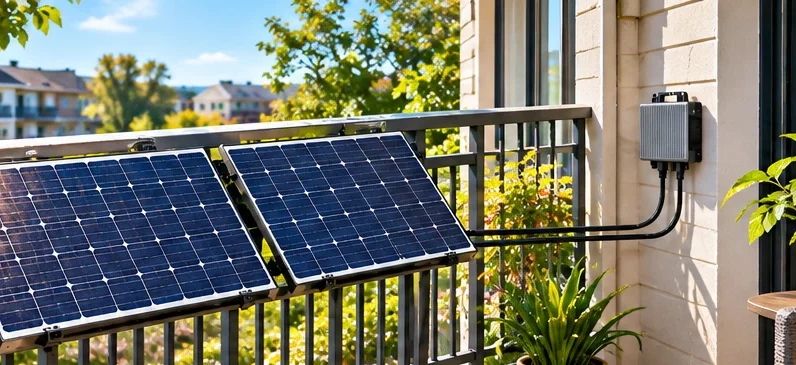
Plug-in solar is a small solar photovoltaic (PV) system designed to generate electricity for use within a home or apartment. A typical setup includes one or more solar panels, a compatible microinverter, mounting hardware, cables and a connection method approved for the particular system and location.
Unlike a conventional rooftop installation, a small plug-in system may be designed to connect on the customer side of the electric meter through a designated outlet or other approved connection. The exact arrangement depends on the equipment and local rules. It is not safe to assume that any solar panel or inverter can be connected to an ordinary household receptacle.
Plug-in systems are sometimes called balcony solar because panels may be installed on a balcony, patio, terrace, fence or another suitable outdoor location. They are generally smaller than whole-home rooftop systems and are intended to offset part of a household’s electricity use rather than supply every appliance.
How Do Plug-In Solar Panels Work?
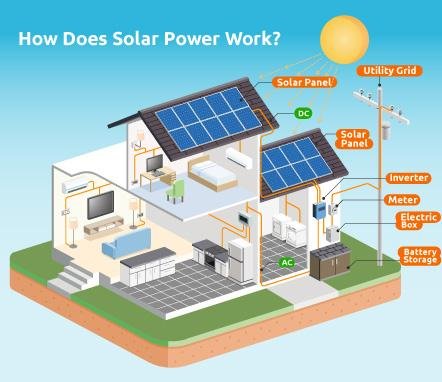
The basic energy conversion process is similar to that of a larger solar installation:
- Solar panels capture sunlight. Photovoltaic cells convert sunlight into direct-current (DC) electricity.
- A microinverter converts the electricity. The inverter changes DC electricity into alternating-current (AC) electricity compatible with the building’s electrical system.
- Power is used in the home. When the system is producing electricity, household loads may use that generation and draw less electricity from the utility.
- The grid supplies any shortfall. If household demand is higher than solar production, the utility continues to provide the difference.
Actual energy production changes throughout the day and year. Panel orientation, tilt, shading, local weather, temperature and system size all influence output. A small system will usually contribute only a portion of a typical home’s electricity needs.

What Equipment Does a Plug-In Solar System Need?
Before comparing kits, understand the main components and what each one does.
- Solar panels: Produce DC electricity from sunlight. Their rated output is usually stated in watts.
- Microinverter: Converts the panels’ DC output into AC electricity and provides grid-interactive functions appropriate to the system.
- Mounting hardware: Secures panels to a balcony, patio, ground stand or other approved location. It must be suitable for wind loads and the building surface.
- Cables and connection equipment: Must be supplied or specified for the exact system and used only as permitted by the manufacturer’s instructions and local requirements.
- Monitoring equipment: Some systems include an app or meter to show generation and system status.
Some products also include a battery, but a battery is not a standard requirement for a basic grid-connected plug-in solar system. Check the full equipment list: a low advertised price may exclude panels, mounting hardware, monitoring equipment or electrical work.
How Much Do Plug-In Solar Panels Cost?
Prices depend on panel capacity, inverter, mounting hardware, certification, monitoring features, shipping and whether professional electrical work is needed. As an October 2026 market snapshot, one U.S. buying guide reported starter kits in the approximate $285–$800 range and many 800-watt kits around $1,100–$2,000. These are indicative advertised prices, not a guaranteed quote or a complete installed-cost estimate.
Before comparing prices, check whether the kit includes:
- All solar panels and the correct inverter
- Mounting hardware suitable for your location
- Required cables and approved connection equipment
- Monitoring equipment, if desired
- Any electrician, permit, inspection or utility-related costs that apply
- Shipping, taxes, warranty and replacement-part costs
Do not choose a system based on wattage or price alone. Confirm that the complete system is certified or listed to the standard required by the applicable law and authority having jurisdiction. A kit sold online is not automatically approved for use in every state.
How Much Electricity Can a Plug-In Solar System Generate?
Output depends on the system’s rated capacity and the sunlight available at the installation site. An 800-watt system does not produce 800 watts continuously throughout the day. Its output rises and falls with sunlight, shading, temperature, orientation and weather.
For a useful estimate, use a location-specific solar production calculator or ask a qualified solar professional to model the proposed panel position. Balcony railings, nearby buildings, trees and a vertical mounting angle can reduce production compared with well-oriented, unshaded panels.
Also distinguish between a panel’s rated power in watts (W) and the energy it generates over time in kilowatt-hours (kWh). Your electricity bill is generally based on kWh, so annual energy production is more useful for estimating bill impact than the panel’s wattage alone.
Can Plug-In Solar Panels Reduce Your Electricity Bill?
They may reduce the amount of electricity you purchase from your utility when the system generates power at the same time your home is using it. The financial benefit depends on how much energy the system produces, how much of that energy your household uses immediately, your electricity rate and the rules for any electricity sent back to the grid.
Do not assume that excess generation will earn a credit. Some plug-in solar laws and system designs limit or prevent export to the utility grid. Where export is permitted, compensation and metering arrangements depend on the utility and applicable state rules.
A simple way to think about potential savings is:
Estimated annual bill savings = solar electricity used in the home × the applicable electricity price
This is a simplified estimate. It does not include equipment cost, installation expenses, financing, maintenance, degradation or changes in utility rates. Compare the estimated annual savings with the complete upfront cost before deciding whether a system makes financial sense.
Are Plug-In Solar Panels Legal in the United States?
There is no single nationwide permission that makes every plug-in solar kit legal everywhere in the United States. State laws are changing, and requirements may differ by system capacity, certification, installation method, utility notification, landlord or homeowners association rules, and local building or fire codes.
There is also an important electrical-code issue. UL Solutions explains that the 2026 National Electrical Code (NEC) does not recognize plug-in photovoltaic modules that feed a building through a standard back-fed receptacle. UL Standards & Engagement has developed UL 3700 as an investigation outline for interactive plug-in PV equipment and systems. State legislation may create specific pathways or exemptions, but that does not mean every product or installation is automatically compliant.
Examples of state plug-in solar laws and effective dates
The following examples illustrate why checking the effective date matters. This is not a complete 50-state legal survey, and the details of each law must be checked before installation.
| State | Position as of November 6, 2026 | Important note |
|---|---|---|
| Utah | Law in effect | HB 340 took effect in May 2025; check the statutory equipment and installation conditions. |
| Maine | Law in effect | LD 1730 took effect in July 2026; capacity and electrician requirements can depend on system size. |
| Maryland | Law in effect | HB 1532 took effect in 2026; confirm the applicable technical and notification requirements. |
| Vermont | Law in effect | S.202 took effect in July 2026; renters may have notice and placement obligations. |
| Colorado | Law in effect | HB 26-1007 took effect in August 2026 and includes a system output limit and other conditions. |
| Connecticut | Law in effect | Public Act 26-127 plug-in provisions took effect October 1, 2026. |
| California | Signed; future effective date | SB 868 is scheduled to take effect January 1, 2027. |
| New Hampshire | Signed; future effective date | SB 540 is scheduled to take effect January 1, 2027. |
| New Jersey | Signed; future effective date | The Garden State Balcony Solar Act is scheduled to take effect March 1, 2027. |
| Virginia | Signed; future effective date | HB 395 is scheduled to take effect January 1, 2027. |
These examples are based on legislative and policy tracking available at the time of writing. A signed law with a future effective date is not permission to connect a system before that date. Other states may have bills pending or different utility interconnection requirements.
What should you check before connecting a system?
- Read the current law and regulations for your state and municipality.
- Ask your electric utility whether registration, notification, metering or an interconnection process is required.
- Confirm the exact system capacity and certification standard allowed by the law.
- Check local building, fire and electrical codes, plus any applicable permit or inspection rules.
- If you rent or live in a condominium, review the applicable lease, building rules and state protections.
- Use a qualified electrician when required or whenever the outlet, circuit, mounting or wiring suitability is uncertain.
Are Plug-In Solar Panels Safe?
Safety depends on the complete system, the installation and compliance with applicable electrical requirements. A plug-in solar inverter can interact with a building’s wiring, so the connection must never be improvised.
Use equipment that is appropriately listed or certified for the intended application and accepted by the relevant authority. Follow the manufacturer’s installation instructions and all state and local requirements. Do not modify plugs, cables, inverters, breakers or electrical outlets to make incompatible equipment fit.
Panels mounted on balconies or elevated structures also need secure attachment. Wind, falling objects, water ingress, cable damage and access for emergency services should be considered. Ask the building owner or manager about structural and placement restrictions where relevant.

Will Plug-In Solar Work During a Power Outage?
Do not assume that a grid-connected plug-in solar system will power your home during an outage. Grid-interactive inverters are generally designed to stop supplying power when the grid fails, helping protect utility workers and prevent unintended backfeed.
Backup power requires equipment specifically designed and configured for that purpose, such as a compatible battery system with an approved backup function. A basic plug-in solar kit is not the same as a solar-plus-storage system with islanding capability.
Can Renters and Apartment Residents Use Plug-In Solar?
Small systems may appeal to renters and apartment residents because they can sometimes be mounted on balconies or patios rather than on a roof. However, access to a sunny outdoor area does not automatically mean installation is allowed.
Before buying, check the state law, lease, building rules, balcony load and mounting restrictions, fire-safety requirements and any landlord or homeowners association procedures. Panels must be secured against wind and must not obstruct exits, walkways or emergency access.
Plug-In Solar vs. Traditional Rooftop Solar
| Feature | Plug-in solar | Traditional rooftop solar |
|---|---|---|
| Typical scale | Small system designed to offset part of household use | Larger system designed around household energy needs and roof capacity |
| Location | Balcony, patio or other suitable outdoor space | Usually installed on a roof or ground-mounted structure |
| Installation | May be simpler, but must meet state, utility and electrical requirements | Typically requires professional design, permitting and utility interconnection |
| Potential bill impact | Usually a modest offset | Can offset a larger share of electricity use |
| Backup during outages | Not provided by a basic grid-connected kit | Requires compatible battery and backup equipment |
| Best suited to | Some households seeking a smaller solar option | Homeowners seeking a larger residential solar system |
Neither option is automatically best for everyone. Compare the system’s expected production, total cost, legal requirements and your household’s electricity use.
Advantages and Disadvantages of Plug-In Solar
Potential advantages
- Smaller scale: May suit households that cannot accommodate a full rooftop system.
- Potential bill reduction: Solar generation used in the home can reduce grid electricity purchases.
- Flexible placement: Some systems can be installed in suitable outdoor spaces such as patios or balconies.
- Lower initial commitment: Some kits cost less upfront than a conventional residential solar installation.
Potential disadvantages
- Limited output: A small system will usually offset only part of household electricity use.
- Rules vary: State laws, utility requirements and local codes can limit where and how a system is used.
- Mounting constraints: Shade, balcony orientation, wind exposure and available space can reduce performance.
- Safety and certification: Not every online product is suitable or approved for connection to a building’s wiring.
- Limited outage capability: A basic grid-connected kit generally does not provide backup power.
Are Plug-In Solar Panels Worth It?
Plug-in solar may be worth investigating if you have a suitable sunny location, a compatible and legally permitted system, and electricity usage during the hours when the panels generate power. It may be less attractive if your balcony is heavily shaded, your utility rate is low, the system’s mounting is difficult or your local rules do not permit the proposed connection.
Before purchasing, estimate realistic annual production, calculate the value of the electricity you will use, and compare that value with the complete cost of the equipment and any required professional work. If you own a suitable roof and want to offset a large share of your electricity use, compare plug-in solar with a properly designed rooftop system as well.
Key Takeaways
- Plug-in solar is a small PV system intended to offset part of a building’s electricity use.
- Panels generate DC electricity and a microinverter converts it to AC electricity.
- Costs and output vary by equipment, location, mounting and installation requirements.
- U.S. rules are changing, and a signed law may not yet be in effect.
- The 2026 NEC does not recognize plug-in PV modules feeding a building through a standard back-fed receptacle; state-specific laws and requirements must be checked.
- Never improvise an electrical connection or assume a product advertised online is approved for your home.
- A basic grid-connected plug-in system should not be relied on for backup during an outage.
Frequently Asked Questions About Plug-In Solar Panels
1. Can you plug solar panels into a regular wall outlet?
Only where the system and connection are permitted under applicable state and local rules and the equipment meets the required standards. Do not connect a conventional solar panel or an unapproved inverter to a household outlet.
2. How much do plug-in solar panels cost?
Prices vary by capacity and included equipment. An October 2026 market guide reported starter kits around $285–$800 and many 800-watt kits around $1,100–$2,000. Check current prices and whether mounting, shipping, taxes and electrical work are included.
3. How much electricity can an 800-watt plug-in solar system produce?
There is no single daily or annual output figure. Production depends on location, panel angle, shading, weather and system design. Use a location-specific production estimate rather than assuming the system operates at its rated wattage all day.
4. Can plug-in solar panels power a refrigerator?
They may contribute electricity while a refrigerator is operating, but a small grid-connected system does not guarantee that it can run the refrigerator on its own. Appliance demand, solar output and the home’s electrical configuration all matter.
5. Do plug-in solar panels work during a power outage?
Most basic grid-connected systems shut down when the grid fails. Backup operation requires compatible equipment specifically designed and configured to provide it safely.
6. Are plug-in solar panels legal in all U.S. states?
No. Some states have enacted specific laws, some laws have future effective dates, and other locations may still require the utility’s normal interconnection process. Check current state and local requirements before connecting a system.
7. Can renters install balcony solar panels?
Possibly, depending on state law, the lease, building rules, mounting safety and the location of the panels. Get any required permission and confirm the applicable legal protections before installation.
8. Do plug-in solar panels need a battery?
No. A basic grid-connected system can operate without a battery. A battery is a separate component that may store surplus electricity when the system is designed to support storage.
9. Can plug-in solar send excess electricity back to the grid?
That depends on the system and applicable rules. Some plug-in solar frameworks limit or prohibit export. Never assume you will receive net-metering credits for surplus electricity.
10. What should I check before buying a plug-in solar kit?
Check state and utility rules, equipment certification, inverter compatibility, system capacity, mounting safety, warranty, included components and any electrician or inspection costs. Confirm that the exact model is permitted at your address.
Related Solar Energy Resources
- How Solar Power Works
- Solar Panels for Homes
- DIY Home Solar Systems
- How Does Solar Battery Storage Work?
- Solar Panel Cost Calculator
Watch: Plug-In Solar Panels Explained
Watch our video guide to understand how plug-in solar works, what to consider before buying, and why local rules and electrical safety matter.
Final Thoughts
Plug-in solar panels could give some households a practical way to start generating a portion of their own electricity. But the small size of the system does not make electrical safety or legal compliance optional. Check your state’s current rules, speak with your utility where required, and choose equipment designed and approved for the intended application. A careful comparison will help you decide whether plug-in solar or a traditional residential solar system is the better fit.
Sources and further reading
- UL Solutions – 2026 National Electrical Code and plug-in photovoltaic systems
- Solar United Neighbors – Plug-in Solar Consumer Guide
- Solar.com – Plug-In Solar Panels: 2026 Guide
- Connecticut General Assembly – 2026 Acts Affecting Energy and Utilities
- New Jersey League of Municipalities – Portable Solar Legislation
- Southern Alliance for Clean Energy – Plug-In Solar Policy and Safety White Paper (2026)
Editorial note: Laws, utility tariffs, product prices and technical standards can change. This article is educational, not legal or electrical advice. Verify current requirements with your state, local authority and utility before purchasing or connecting equipment.