Solar Battery Storage Price: What Homeowners Pay
Adding a battery to a home solar system can make it easier to use stored electricity after sunset and keep selected appliances running during a power outage. But the solar battery storage price can be a major part of a home’s total solar investment. Before requesting quotes, it helps to understand what an installed system includes, how battery capacity affects the price, and which extra electrical work may be required.
Understanding your solar battery storage capacity is crucial for optimizing your energy usage.
For a current U.S. market reference, EnergySage reported an average installed price of about $15,647 for 13.5 kWh of storage before available incentives, based on its marketplace data. That is a useful benchmark, not a guaranteed quote: local labor, equipment, system design and backup requirements can change the final amount considerably.
The solar battery storage capacity is an important factor in determining how effectively you can store energy.
How much does solar battery storage cost?
When considering installation, assess the solar battery storage capacity that meets your needs.
EnergySage’s July 2026 guide reported an average installed cost of $15,647 for a 13.5 kWh battery system. Its first-half 2026 marketplace data also showed substantial differences between battery brands and locations. For example, the reported typical costs included about $13,055 for a 13.5 kWh Tesla battery, $14,290 for a 10 kWh Enphase battery and $18,480 for a 15 kWh FranklinWH battery. These figures are marketplace averages, not manufacturer retail prices or guaranteed installed quotes.
Many homeowners prioritize the solar battery storage capacity when evaluating battery brands.
Compare systems on both total installed price and usable capacity. A lower total price may simply reflect a smaller battery, fewer backup features or a different installation scope.
The solar battery storage capacity can significantly influence your energy independence.
What does the installed battery price include?

A complete installation may include more than the battery cabinet itself. Ask the installer to itemize:
- Battery equipment: the cells, enclosure, battery management system and monitoring hardware.
- Inverter or power conversion equipment: a compatible inverter or hybrid inverter, depending on the existing solar setup.
- Backup equipment: a gateway, transfer switch, critical-loads panel or other hardware if backup operation is required.
- Electrical materials: wiring, breakers, disconnects, conduit and mounting equipment.
- Labor and commissioning: installation, configuration, testing and handover.
- Permits and inspections: local approvals and any required utility coordination.
EnergySage estimates equipment accounts for roughly 50–60% of an energy-storage system’s price, with labor and project planning making up much of the remainder. The share varies by project.
Your solar battery storage capacity will determine how much energy you can store for later use.
Solar battery price per kWh: how to compare systems
Battery capacity is measured in kilowatt-hours (kWh). A price-per-kWh comparison can help you compare batteries of different sizes, but make sure each quote uses the same basis: usable capacity rather than mixing nominal and usable capacity.
Understanding your solar battery storage capacity will help in selecting the right system.
For illustration, a $15,000 installed system with 13.5 kWh of usable capacity works out to about $1,111 per usable kWh. This is a simple comparison calculation, not a market average. It does not tell you whether the battery has enough power output, backup capability or warranty coverage for your household.
Also compare continuous power (kW), usable capacity (kWh), warranty terms, expected operating conditions and the equipment included in the quote. A battery with more storage does not necessarily deliver more power at one time.
The solar battery storage capacity can vary greatly depending on the battery type.
What affects the cost of a home solar battery?

1. Battery capacity and power
Larger storage capacity generally increases the equipment cost. Higher power output may also require different equipment. Size the battery around the loads you want to run and the duration you want to support, rather than buying the largest system by default.
Choosing the correct solar battery storage capacity is essential for efficiency.
2. Battery chemistry and product design
Different battery technologies, product designs, warranties and monitoring features have different price points. Compare the manufacturer’s warranty, usable capacity, operating limits and supported installation configuration rather than choosing on price alone.
When evaluating options, focus on the solar battery storage capacity for the best fit.
3. New solar installation or retrofit
Adding storage while installing a new solar array may allow some electrical work, permitting and labor to be shared. Retrofitting a battery to an existing system may require compatibility checks, additional equipment or changes to the inverter arrangement. The cheaper option depends on the home and the equipment already installed.
Compatibility with existing systems will also affect your solar battery storage capacity.
4. Backup power requirements
Backup for a few essential circuits is different from whole-home backup. Supporting large loads such as central air conditioning, electric heating, well pumps or electric vehicle charging may require more battery capacity, greater power output and additional electrical equipment.
Different backup requirements can impact the necessary solar battery storage capacity.
5. Electrical panel and site work
An older or full electrical panel, long cable runs, difficult mounting locations, code upgrades or other site-specific work can increase labor and material costs. Ask the installer to identify these items before signing.
Your solar battery storage capacity should also align with your electrical panel’s capabilities.
6. Location, labor and permitting
Prices vary across states and utility territories. Local labor rates, permitting requirements, installer availability and the products commonly supplied in an area can all affect the quote. Use local written estimates rather than assuming a national average will match your home.
Local installation factors will influence your available solar battery storage capacity.
Does adding a battery to existing solar panels cost more?
It can. A retrofit may need a compatible AC-coupled battery, a hybrid inverter, a new gateway or changes to the existing electrical layout. On the other hand, some homes already have equipment designed for storage, which can simplify the work. Ask installers to quote the same battery capacity and backup scope so you can compare retrofit proposals fairly.
Considering your solar battery storage capacity can aid in understanding installation costs.
Are there federal tax credits or battery incentives in 2026?
Do not automatically subtract the former 30% residential clean energy credit from a 2026 battery quote. The IRS states that the Section 25D residential clean energy credit is not allowed for expenditures made after December 31, 2025. For a new 2026 homeowner purchase, do not assume this federal personal tax credit is available.
State, utility and local programs may still be available, and their eligibility rules and funding can change. Check the relevant state energy office, utility and program administrator directly before relying on an incentive in your budget. Ask the installer to show any incentive as a separate line item and confirm who is eligible to claim it.
How to compare solar battery installation quotes
Make sure to evaluate the solar battery storage capacity in the quotes you receive.

Request at least two or three itemized proposals where practical. Use this checklist when comparing them:
- Exact battery make and model.
- Nominal and usable capacity in kWh.
- Continuous and peak power output in kW.
- Whether the price includes an inverter, gateway and backup panel.
- Which circuits or appliances will operate during an outage.
- Whether the quote includes permits, inspections, electrical upgrades and commissioning.
- Warranty length, capacity-retention terms and throughput or cycle limits.
- Monitoring, service and workmanship support.
- Any state or utility incentives, shown separately with eligibility conditions.
- Final cash price and financing terms, including fees and total repayment.
Ask each installer to explain exclusions and assumptions in writing. A low headline price may not include backup hardware, panel work or the permits needed to complete the project.
Video: a real-world solar and battery installation cost breakdown
This video includes insights into optimizing your solar battery storage capacity.
The following homeowner walkthrough shows a solar-and-battery installation and discusses the equipment and project costs involved. It was produced outside the United States, so use it for general project context only—not as a guide to U.S. prices, incentives or electrical requirements.
Is a solar battery worth the price?
A battery’s value depends on what you need it to do. A household that experiences frequent outages may place a high value on backup power. A home with low export compensation or time-of-use electricity rates may benefit from storing solar generation for later use. In other situations, the battery’s upfront cost may be difficult to recover through bill savings alone.
Compare the expected savings with the installed price, round-trip efficiency, usable capacity, warranty, likely replacement timing and your utility’s export and time-of-use rules. Keep backup resilience as a separate benefit rather than treating every dollar of backup value as guaranteed bill savings.
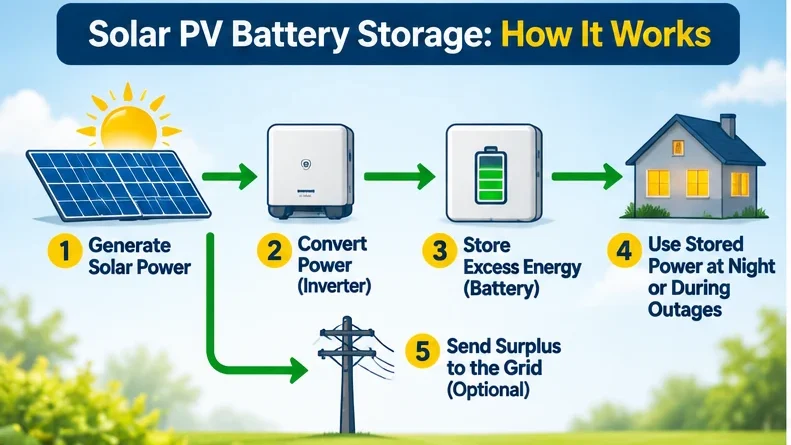
For help deciding how much storage you need, see our guide to solar battery storage capacity. You can also read how solar battery storage works and our overview of the pros and cons of solar battery storage.
By understanding solar battery storage capacity, you can make an informed decision.
Key takeaways
- A current U.S. marketplace reference is about $15,647 installed for 13.5 kWh, before available incentives, based on EnergySage’s July 2026 data.
- Battery size, usable capacity, power output, inverter compatibility and backup scope all affect the quote.
- Installed cost includes more than the battery hardware: electrical work, labor, permits and backup equipment may be significant.
- Compare itemized proposals using the same capacity and backup requirements.
- The federal Section 25D residential clean energy credit does not apply to expenditures made after December 31, 2025; check state and utility programs separately.
- A battery is not automatically the best financial choice for every solar home.
Frequently asked questions
The solar battery storage capacity is often a key consideration for homeowners.
1. How much does solar battery storage cost in the U.S.?
EnergySage reported an average installed price of about $15,647 for 13.5 kWh of storage in its July 2026 guide. Your price may be higher or lower depending on location, equipment and installation requirements.
Determining your ideal solar battery storage capacity will enhance your solar experience.
2. How much does a 10 kWh solar battery cost?
There is no single national price for a 10 kWh system. Brand, usable capacity, inverter needs, backup equipment and labor all matter. Compare current local installed quotes rather than multiplying a single advertised price per kWh.
3. Is the battery price the same as the installed price?
No. The battery unit is only one part of the project. An installed quote may also include an inverter, gateway, backup panel, wiring, labor, permits, inspections and commissioning.
4. Is it cheaper to install a battery with new solar panels?
It can be, because some labor, permitting and electrical work may be shared with the solar installation. The actual difference depends on system design and the equipment already included.
Integrating your solar battery storage capacity efficiently can maximize savings.
5. Does a solar battery need a separate inverter?
It depends on the battery and solar system. Some batteries include power-conversion equipment; others use a compatible hybrid inverter or a separate inverter. Have the installer confirm compatibility in writing.
The right solar battery storage capacity will ensure your energy needs are met.
6. Does a larger battery always cost less per kWh?
Not necessarily. Price per usable kWh varies by brand, product configuration, installation complexity and quote scope. Compare equivalent installed systems and warranty terms.
7. Does the federal solar tax credit still cover home batteries in 2026?
The IRS says the Section 25D residential clean energy credit does not apply to expenditures made after December 31, 2025. Check current state and utility incentives separately.
Reassess your solar battery storage capacity to understand future needs.
8. Can I add a battery to my existing solar panels?
Often, yes, but the existing inverter and electrical system must be compatible. A retrofit may require additional equipment or electrical work.
Consulting with professionals can help optimize your solar battery storage capacity.
9. Does whole-home backup cost more than essential-load backup?
It can. Whole-home backup may require greater battery capacity, higher power output and additional equipment to support larger household loads. Ask for separate quotes for essential-load and whole-home backup.
Understanding the implications of your solar battery storage capacity is crucial.
10. How many quotes should I get for a home battery?
Where practical, compare at least two or three itemized proposals. Make sure each quote specifies the same usable capacity, power output, backup circuits, equipment and installation scope.
Each battery has different specifications for solar battery storage capacity.
Related resources
- Solar PV battery storage
- How does solar battery storage work?
- Solar battery storage capacity
- Pros and cons of solar battery storage
- Solar panel cost calculator
- How much does a solar panel system cost?
Sources and further reading
- EnergySage: Solar battery cost — 2026 marketplace data
- IRS: FAQs on modifications to energy credits, including Section 25D
- U.S. Department of Energy: Solar plus storage
- NREL: Residential battery storage — Annual Technology Baseline
Prices and incentive rules can change. This guide is educational and is not a quote, tax opinion or financial recommendation. Confirm current equipment specifications, local requirements and program eligibility before making a purchase.