Hidden Environmental Costs of Solar Energy: What Often Gets Overlooked
Understanding the hidden environmental costs of solar energy is crucial for making informed decisions about renewable energy sources.
Solar energy is widely recognised as a cleaner alternative to electricity generated from coal, oil and natural gas. Solar panels produce electricity without burning fuel, and photovoltaic systems generate no direct air pollution while operating.
However, the environmental story does not begin when sunlight reaches a solar panel, and it does not end when the system stops producing electricity.
It is essential to recognize the hidden environmental costs of solar energy throughout its entire lifecycle.
Behind every solar installation is a supply chain involving raw materials, mining, industrial manufacturing, transportation, construction and eventually equipment disposal or recycling. These activities can create environmental pressures that are less visible to the people using solar power.
These hidden environmental costs of solar energy can affect ecosystems, communities, and economies globally.
Understanding the hidden environmental costs of solar energy does not mean solar power is a bad choice. It means looking at the technology more completely, recognising where impacts occur and understanding how they can be reduced.
By acknowledging the hidden environmental costs of solar energy, we can take steps to mitigate them and promote a more sustainable future.

1. The environmental cost of extracting raw materials
Evaluating the hidden environmental costs of solar energy requires a comprehensive analysis of material extraction and production.
Solar panels require a range of materials before they can generate electricity. Conventional crystalline-silicon panels use materials such as silicon, glass, aluminium, copper and various other metals and components.
Extracting and processing these resources can affect the environment in several ways:
The hidden environmental costs of solar energy also include the carbon footprint of manufacturing these essential materials.
- Land disturbance: Mining operations can remove vegetation, alter landscapes and disturb natural habitats.
- Water consumption: Mineral extraction and processing may require water, placing pressure on local water resources.
- Waste generation: Mining and refining can produce waste rock, tailings and processing residues that require careful management.
- Pollution risks: Poorly managed extraction and processing operations can contaminate soil and water.
- Energy consumption: Extracting, refining and transporting materials requires energy, which may come partly from fossil fuels.
These impacts are not unique to solar technology. Conventional power stations, vehicles, electronics and other industrial products also depend on mined materials. Nevertheless, the growing demand for solar equipment makes responsible sourcing and resource efficiency important considerations.
It is crucial to consider the hidden environmental costs of solar energy when developing policies and regulations.
The U.S. Department of Energy’s review of solar photovoltaic supply chains describes the multiple stages involved in producing a conventional silicon panel, from polysilicon and wafers to cells and finished modules.
For a closer look at the materials involved, see our guide to the environmental impact of solar energy throughout its lifecycle.
2. Energy-intensive manufacturing and global supply chains
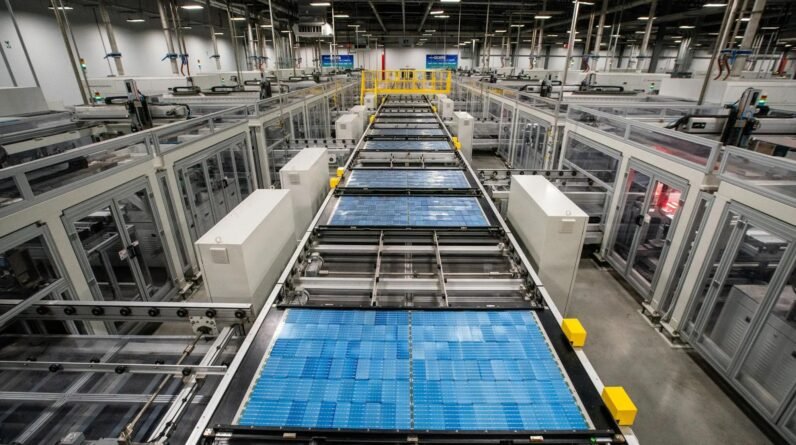
A solar panel does not arrive ready to generate electricity directly from nature. Its production involves several industrial processes, many of which require heat, electricity, specialised equipment and carefully controlled manufacturing conditions.
For conventional silicon photovoltaic panels, the supply chain generally includes:
-
- Producing high-purity polysilicon.
The hidden environmental costs of solar energy highlight the importance of sustainability in manufacturing practices.
-
- Growing silicon ingots.
- Cutting ingots into thin wafers.
- Processing wafers into solar cells.
We must address the hidden environmental costs of solar energy to ensure responsible sourcing of materials.
- Assembling cells into finished modules.
- Adding frames, glass, electrical connections and other components.
Each stage can contribute to energy consumption, industrial emissions and material waste.
Another overlooked issue is where manufacturing takes place. Solar products often pass through international supply chains, meaning that the environmental impacts of production may occur far from the country where the panels are eventually installed.
The electricity used by factories also matters. Manufacturing powered by a carbon-intensive electricity grid can have a different emissions profile from manufacturing that uses a cleaner energy supply.
Research into the U.S. solar photovoltaic supply chain has quantified emissions associated with materials, manufacturing, logistics and installation. This illustrates why the environmental performance of a solar panel cannot be assessed by looking only at its operation.
Read more about the carbon footprint of solar panels compared with fossil fuels.
Assessing the hidden environmental costs of solar energy can lead to more sustainable energy solutions in the long term.
3. Water demand throughout the solar supply chain
Solar power is often described as a low-water source of electricity, particularly when compared with many conventional thermal power plants. However, that does not mean water is irrelevant to solar energy.
Water may be required during the production of solar-grade materials, manufacturing processes, equipment cleaning and certain types of solar power generation.
It is important to distinguish between different technologies:
- Photovoltaic (PV) panels: Generate electricity directly from sunlight. The photovoltaic conversion process itself does not require a continuous water supply.
- PV panel manufacturing: Industrial production can require water for cleaning, processing and other manufacturing operations.
- Concentrating solar power (CSP): Some systems use water for cooling and other plant operations, depending on their design.
- Panel cleaning: Water may be used to remove dust and other deposits, although requirements vary with climate, site conditions and cleaning methods.
The location of a manufacturing facility or solar installation can make a difference. Water use in a region with abundant supplies may have a different local impact from the same demand in a water-stressed area.
A 2025 study of photovoltaic manufacturing water intensity also highlighted substantial variation between estimates and the need for better, more current data.
4. Land use and the indirect cost of large solar farms
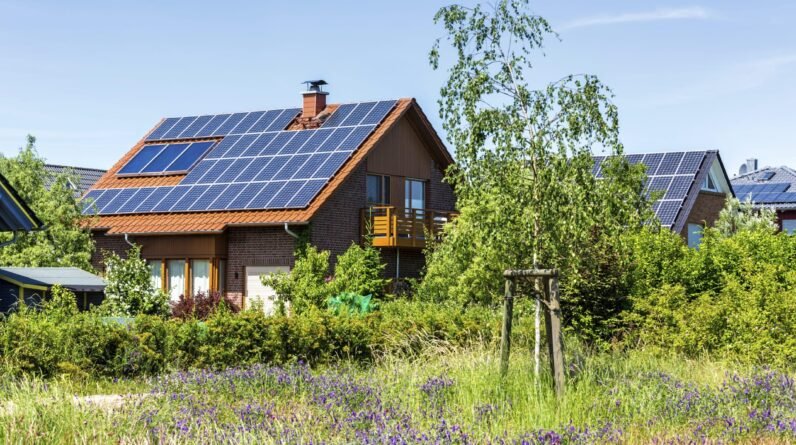
Rooftop solar panels generally make use of existing buildings, so they do not require the same type of dedicated land development as large ground-mounted installations.
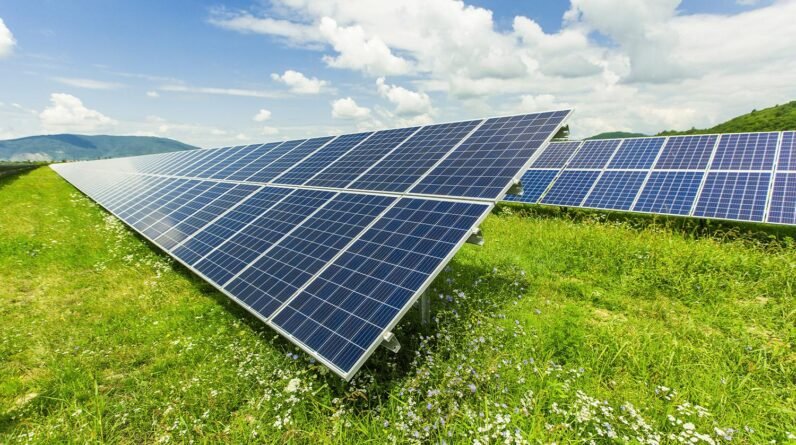
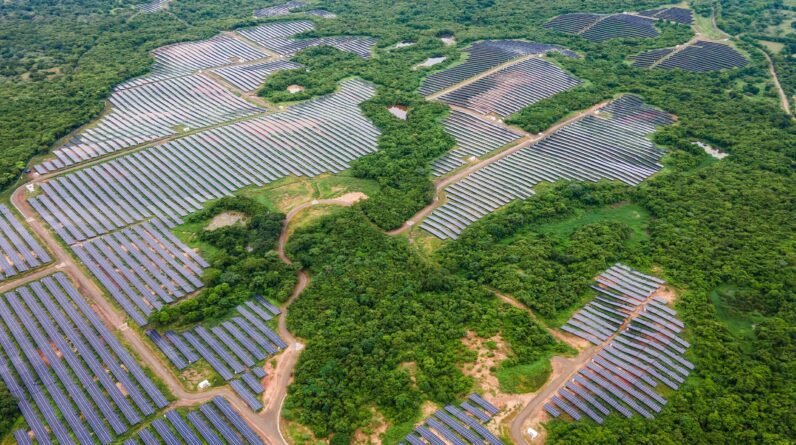
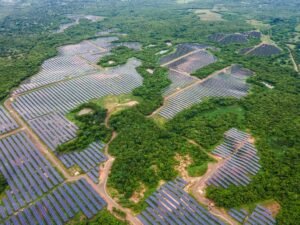
Utility-scale solar farms, however, can require extensive areas of land. Depending on the site and how it is developed, construction may involve:
- Removing existing vegetation.
- Changing natural land cover.
- Disturbing soil and drainage patterns.
- Fragmenting habitats through fencing and infrastructure.
- Competing with other potential land uses.
The environmental consequences depend heavily on the location. Developing a previously disturbed site is not equivalent to clearing a sensitive natural habitat.
Solar farms can also be designed to reduce some land-use conflicts. For example, agrivoltaic projects combine solar electricity generation with certain agricultural activities, while suitable brownfield and degraded sites may offer alternatives to undisturbed land.
The U.S. Geological Survey has reviewed the environmental interactions of utility-scale solar development, including land-cover change, biodiversity, soil and water resources.
5. Transportation, installation and infrastructure
Solar panels and their supporting equipment may travel through several countries before reaching the final installation site. Transporting raw materials, wafers, cells, modules, inverters, mounting structures and batteries creates additional energy demand and emissions.
Installation also requires more than the panels themselves. Depending on the project, supporting infrastructure can include:
Transportation contributes to the hidden environmental costs of solar energy, influencing its overall sustainability.
- Aluminium or steel mounting systems.
- Electrical wiring and inverters.
- Foundations, supports or ground screws.
- Transformers and grid connection equipment.
- Access roads and construction facilities for larger projects.
For a residential rooftop installation, these impacts are generally much smaller in scale than those associated with a large solar farm. Nevertheless, they form part of the wider environmental footprint of the technology.
Installation processes also need to consider the hidden environmental costs of solar energy to minimize impacts.
Transport and construction impacts should be considered as part of a complete lifecycle assessment rather than treated as separate from solar electricity generation.
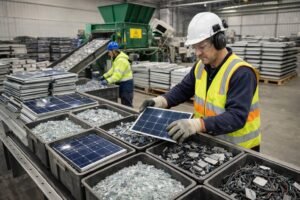
6. Solar panel waste and the challenge of recycling
Managing the hidden environmental costs of solar energy will become increasingly important as installations grow.
Solar panels are designed to operate for decades, but they do not last forever. Eventually, panels may be removed because of age, damage, system upgrades, repowering or changes to a property’s energy requirements.
This creates a waste-management challenge as solar installations become more widespread.
Solar panels contain valuable materials that may be recovered, including glass, aluminium and certain semiconductor materials. However, separating and recovering these materials can be technically demanding and may not always be economically attractive.
If panels are not properly collected and processed, valuable resources may be lost and waste-management risks may increase.
Some photovoltaic technologies also contain materials that require appropriate handling at the end of their useful lives. The exact requirements depend on the panel technology and applicable waste regulations.
Recycling infrastructure, collection systems and clear end-of-life responsibilities are therefore important parts of a sustainable solar industry.
The hidden environmental costs of solar energy will require new strategies for recycling and waste management.
For more detail, see our article on solar panel lifecycle impacts, including disposal and recycling.
7. Environmental impacts can occur far from the solar installation
Understanding the hidden environmental costs of solar energy can foster greater innovation in the industry.
One reason these costs are often overlooked is that the impacts are geographically separated.
A homeowner may install solar panels on a roof in the United States, while the raw materials are extracted in one country, processed in another and assembled somewhere else. The environmental consequences of those activities may be experienced by communities that never use the finished solar system.
This creates a difference between the location where solar electricity provides its benefits and the locations where some of its production impacts occur.
Supply-chain transparency, environmental standards, responsible sourcing and better manufacturing practices can help address this issue.
It is also important not to assume that every solar manufacturer or supplier has the same environmental performance. Production methods, electricity sources, resource efficiency and waste controls can vary considerably.
8. The hidden costs should be compared with the impacts of fossil fuels
Recognising the environmental costs of solar energy does not mean treating solar and fossil-fuel electricity as environmentally equivalent.
Comparing the hidden environmental costs of solar energy with fossil fuels can help inform energy policy decisions.
Coal, oil and natural gas have their own substantial impacts, including fuel extraction, transportation, air pollution and greenhouse gas emissions during electricity generation.
Solar photovoltaic systems generally have much lower lifecycle greenhouse gas emissions than fossil-fuel electricity sources, even when manufacturing and other upstream activities are included.
The International Energy Agency’s Photovoltaic Power Systems Programme publishes lifecycle assessment information that considers the environmental impacts of PV systems from manufacturing through end-of-life management.
The hidden environmental costs of solar energy are often overlooked in discussions about renewable energy benefits.
The important distinction is that solar energy is not impact-free. Its environmental performance must be assessed across its entire lifecycle and compared with the electricity generation it replaces.
For a more detailed emissions comparison, read Solar Panels Carbon Footprint: How It Compares With Fossil Fuels.
9. How the hidden environmental costs of solar energy can be reduced
Many of the environmental pressures associated with solar technology can be reduced through better planning, manufacturing, sourcing and end-of-life management.
Improving practices can reduce the hidden environmental costs of solar energy, boosting its overall value.
Choose suitable locations for solar installations
Using rooftops, parking structures, previously developed land and other suitable disturbed sites can reduce the need to convert natural habitats for solar development.
Improve manufacturing efficiency
Manufacturers can reduce resource use through more efficient production processes, improved material recovery and lower-carbon electricity supplies.
Support responsible material sourcing
Supply-chain transparency and environmental safeguards can help reduce the risks associated with mineral extraction and processing.
Use water carefully
Responsible planning can mitigate the hidden environmental costs of solar energy and lead to better outcomes.
Manufacturers and solar project operators can consider local water availability, efficient cleaning methods and suitable cooling technologies when planning their operations.
Expand panel recycling and reuse
Improved collection systems, repair, reuse and recycling can reduce waste and help recover materials for future manufacturing.
Assess projects across their full lifecycle
Environmental assessments should consider more than the electricity produced during operation. They should include materials, manufacturing, transportation, installation, land use and end-of-life management.
10. Are the hidden environmental costs of solar energy worth it?
The answer depends on the technology, location, manufacturing process and electricity source being replaced. However, the existence of environmental costs does not automatically make solar energy an environmentally poor choice.
Ultimately, the hidden environmental costs of solar energy must be balanced against its potential benefits.
Solar panels require resources and industrial production, and large solar farms can affect land and habitats. At the same time, photovoltaic systems can generate electricity for decades without burning fossil fuels during operation.
The key question is not whether solar energy has zero environmental impact. It does not. The more useful question is whether its total environmental impacts are lower than those of the alternatives and how those impacts can be reduced further.
When solar projects are responsibly sourced, carefully located, efficiently manufactured and properly managed at the end of their lives, they can contribute to a lower-emissions electricity system while limiting avoidable environmental damage.
Questions about the hidden environmental costs of solar energy are essential for future energy developments.
Frequently Asked Questions
What are the hidden environmental costs of solar energy?
They include the environmental effects of mining raw materials, energy-intensive manufacturing, water use in production, transportation, land development for large solar farms and the disposal or recycling of old panels.
These hidden environmental costs of solar energy are crucial for understanding its true lifecycle impacts.
Are solar panels completely environmentally friendly?
No. Solar panels generate electricity without direct air pollution during operation, but their production and end-of-life management have environmental impacts. Their overall lifecycle emissions are generally much lower than those of fossil-fuel electricity.
Does making solar panels cause pollution?
Addressing the hidden environmental costs of solar energy will require collective effort from all stakeholders.
Solar panel manufacturing uses energy, industrial chemicals and raw materials. These processes can generate emissions and waste, although the scale of the impacts varies by technology, factory and energy supply.
Does solar panel production use a lot of water?
Water is used in some stages of solar-grade material processing and panel manufacturing. The amount varies depending on the manufacturing process, technology and location. This is different from the photovoltaic electricity-generation process, which does not require a continuous water supply.
Awareness of the hidden environmental costs of solar energy can prompt better consumer choices and policies.
Does mining for solar panels harm the environment?
Mining materials used in solar equipment can disturb land, affect habitats, consume water and generate waste. Responsible sourcing and improved extraction and processing practices can help reduce these impacts.
Do solar farms damage natural habitats?
By recognizing the hidden environmental costs of solar energy, we can support greener innovations.
They can, particularly when natural vegetation is cleared or habitats are fragmented. The impact depends on site selection, project design and construction practices. Using previously disturbed land can help reduce habitat impacts.
Are solar panels difficult to recycle?
Recycling can be challenging because panels combine several materials that must be separated. Glass and aluminium can be recovered, but recovering other components may be more complex or costly. Recycling technologies and infrastructure continue to develop.
Awareness of hidden environmental costs of solar energy is vital for fostering a sustainable energy future.
Are rooftop solar panels better for the environment than solar farms?
Rooftop systems generally use existing building space and avoid converting additional land for the panels. Utility-scale solar farms can benefit from economies of scale but require careful site selection to limit habitat and land-use impacts. Neither option is automatically best in every situation.
Do the environmental costs of solar energy outweigh its benefits?
Evaluating the hidden environmental costs of solar energy highlights the need for informed decision-making.
In general, lifecycle assessments find that solar photovoltaic electricity has substantially lower greenhouse gas emissions than fossil-fuel electricity. However, the wider environmental impacts depend on manufacturing, materials, location, land use and end-of-life management.
How can the environmental impact of solar energy be reduced?
Impacts can be reduced through responsible material sourcing, cleaner manufacturing, efficient water use, suitable installation locations, improved recycling and lifecycle-based environmental planning.
Key Takeaways
Understanding the hidden environmental costs of solar energy encourages sustainability in energy practices.
-
- Solar energy has environmental costs beyond the operation of solar panels.
- Mining, raw material processing and manufacturing can consume energy, water and other resources.
- Global supply chains can separate the locations receiving solar energy benefits from the locations experiencing production impacts.
- Large solar farms can affect land, soil and natural habitats, depending on where and how they are developed.
- Panel recycling and end-of-life management are important as the solar industry grows.
The hidden environmental costs of solar energy must be continuously monitored to ensure responsible practices.
- Despite these impacts, solar PV generally has much lower lifecycle greenhouse gas emissions than fossil-fuel electricity.
- Responsible sourcing, careful site selection and better recycling can make solar energy more sustainable.
Related Resources
Education about the hidden environmental costs of solar energy is key to advancing sustainable practices.
The hidden environmental costs of solar energy should be a focal point for future discussions on energy sustainability.
Further Reading and Sources
- U.S. Energy Information Administration – Solar Energy and the Environment
- U.S. Department of Energy – Solar Photovoltaics Supply Chain Review Report
- IEA PVPS – Life Cycle Inventories of Photovoltaic Systems (2026)
- IEA PVPS – Environmental Life Cycle Assessment of Electricity from PV Systems
- U.S. Geological Survey – Environmental Impacts of Utility-Scale Solar Energy
- National Institute of Standards and Technology – Decarbonizing the Economy: Circularizing Solar Photovoltaics