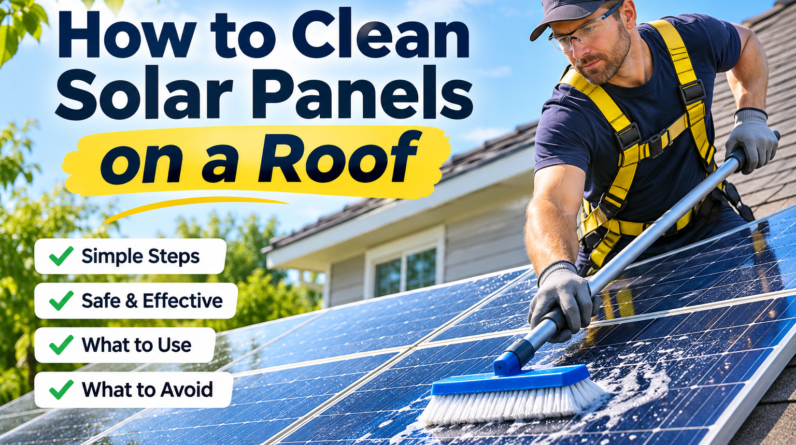
How to Clean Solar Panels on a Roof
Solar panels are designed to withstand outdoor conditions, but dust, pollen, bird droppings, leaves and other debris can gradually accumulate on their surfaces.
To understand the importance of cleaning, let’s explore how to clean solar panels on a roof effectively.
When enough dirt builds up, it can block sunlight from reaching the photovoltaic cells and reduce electricity production. This is why some homeowners consider cleaning their rooftop solar panels as part of regular system maintenance.
Thus, knowing how to clean solar panels on a roof is essential for optimal performance.
But what is the best way to clean solar panels on a roof?
The good news is that cleaning does not usually require complicated equipment. In many situations, clean water and a soft, non-abrasive brush are sufficient. However, working around rooftop solar equipment requires care because of electrical hazards, slippery surfaces and the risk of falling.
In this guide, we’ll explain how to clean solar panels safely, which tools to use, what cleaning methods to avoid and when hiring a professional is the better option.
In this guide on how to clean solar panels on a roof, we’ll also suggest some common tools.
Key Takeaways
- Solar panels should only be cleaned when dirt or debris has accumulated enough to justify cleaning.
- A soft, non-abrasive brush and clean water are generally suitable for routine cleaning, subject to manufacturer instructions.
- A telescopic cleaning pole can help homeowners clean accessible panels from the ground.
- Never walk, kneel or stand on solar panels.
- Avoid high-pressure washers, abrasive brushes and harsh cleaning chemicals.
- Do not clean damaged panels or exposed electrical wiring.
- Professional cleaning is the safer choice for steep roofs, difficult access and heavily soiled installations.
1. Do Solar Panels on a Roof Need Cleaning?
Many ask if knowing how to clean solar panels on a roof truly makes a difference.
Solar panels are exposed to rain, wind, sunlight and outdoor debris throughout their operating life.
Although rain can remove some loose dirt naturally, it does not always remove stubborn deposits such as dried bird droppings, pollen, dust or accumulated grime.
For homeowners, it’s vital to learn how to clean solar panels on a roof effectively.
Whether cleaning is necessary depends on the condition of the panels and their surroundings.
Common causes of dirty solar panels
Several environmental factors can contribute to solar panel soiling:
- Dust: Dry weather, unpaved roads and nearby construction sites can leave dust on panel surfaces.
- Pollen: Trees, flowers and vegetation can release pollen that accumulates during certain seasons.
- Bird droppings: Concentrated deposits can remain on panels even after rainfall.
- Leaves and organic debris: Nearby trees can contribute leaves, seeds and other material.
- Air pollution: Industrial areas and busy roads can expose panels to airborne particles.
- Agricultural activity: Farming, soil preparation and harvesting can release dust into the surrounding air.
Does cleaning improve solar panel performance?
It can, particularly when substantial dirt or debris is blocking sunlight.
However, not every dirty-looking panel needs immediate cleaning. Some deposits have little measurable effect, while others can significantly reduce output.
The National Renewable Energy Laboratory and Pacific Northwest National Laboratory both identify soiling as an important consideration in photovoltaic system maintenance.
This is particularly true when considering how to clean solar panels on a roof before winter.
Before arranging a cleaning service, check your solar monitoring system and look for unexpected changes in electricity production.
Remember that lower output can also result from weather, shading, seasonal changes or equipment problems.
2. What Do You Need to Clean Solar Panels?
Understanding how to clean solar panels on a roof involves knowing the right equipment.
The right cleaning equipment helps remove dirt without scratching the glass or damaging the installation.
For most routine cleaning situations, simple equipment is preferable to aggressive cleaning tools.
Essential solar panel cleaning equipment
Additionally, a water-fed cleaning pole is a great tool for knowing how to clean solar panels on a roof.
| Equipment | Purpose |
|---|---|
| Clean water | Removes loose dirt and surface deposits |
| Soft-bristled brush | Gently loosens stubborn dirt |
| Telescopic extension pole | Reaches accessible panels from the ground |
| Soft, non-abrasive sponge | Helps remove localized deposits when appropriate |
| Water-fed cleaning pole | Delivers water and gentle brushing to elevated panels |
| Manufacturer-approved cleaning products | Used only when specifically recommended |
What type of water should you use?
Clean, low-mineral water is a good choice for solar panel cleaning.
Deionized or purified water can help prevent mineral spots and residue, particularly in areas with hard tap water.
Ordinary clean water may also be suitable, depending on the manufacturer’s instructions and local water quality.
Avoid allowing mineral deposits or cleaning residues to accumulate on the glass.
Do you need special solar panel cleaning products?
Not necessarily.
As a reminder, always check how to clean solar panels on a roof per the manufacturer’s guidance.
Many residential solar panels can be cleaned with water and a suitable soft brush.
Some manufacturers permit particular mild cleaning products, while others recommend water alone.
Always check the instructions for your specific panels before using detergents, soaps or commercial cleaning solutions.
3. When Is the Best Time to Clean Solar Panels?
Timing is key when learning how to clean solar panels on a roof effectively.
Timing matters because solar panels can become hot after prolonged exposure to sunlight.
Cleaning hot glass with cooler water may create thermal stress, and water can evaporate quickly, leaving mineral spots or streaks.
Before you begin, understand how to clean solar panels on a roof during the cooler hours.
Choose a cool time of day
Early morning, late afternoon or an overcast day can be suitable times for cleaning.
Avoid cleaning during the hottest part of the day, particularly when the panels have been exposed to strong sunlight for several hours.
Avoid extreme weather conditions
Do not clean panels during:
- Heavy rain.
- Strong winds.
- Thunderstorms.
- Freezing conditions.
- Extremely hot weather.
- Periods when the roof or surrounding surface is slippery.
These conditions can make cleaning more difficult and increase safety risks.
Check the manufacturer’s instructions
Different solar panels may have different cleaning requirements.
Some manufacturers specify recommended water temperatures, cleaning methods or restrictions on certain tools.
Checking the manufacturer’s recommendations on how to clean solar panels on a roof is essential.
The manufacturer’s documentation should always take priority over general cleaning advice.
4. How to Clean Solar Panels on a Roof: Step-by-Step Guide
Before starting, remember that cleaning rooftop solar panels does not mean you should climb onto the roof.
When discussing how to clean solar panels on a roof, safety is paramount.
Working at height carries serious fall risks. A telescopic water-fed pole may allow suitable cleaning from the ground, but it does not make every installation accessible.
If you cannot reach the panels safely from ground level, hire a qualified professional.
Let’s walk through how to clean solar panels on a roof safely.
Step 1: Inspect the solar panels from the ground
Before cleaning, look at the installation from a safe position.
Check for:
- Visible dust or dirt accumulation.
- Bird droppings.
- Leaves and other debris.
- Cracked or damaged glass.
- Loose or exposed wiring.
- Signs of corrosion or other visible damage.
If you notice damaged panels, exposed cables, scorch marks or electrical problems, do not attempt to clean the affected area.
Contact your installer or a qualified solar technician.
Step 2: Check the system manufacturer’s cleaning instructions
Before using water or cleaning equipment, check the manufacturer’s maintenance documentation.
Refer to your guidelines on how to clean solar panels on a roof effectively.
It should explain:
- Approved cleaning methods.
- Recommended water quality.
- Whether cleaning products are permitted.
- Any restrictions on brushes or other equipment.
- Relevant system shutdown procedures.
Solar panels can continue producing electricity during daylight, even when parts of the system have been switched off.
Never assume that switching off the system makes every component safe to touch.
If electrical isolation is required, have your installer explain the correct procedure. Do not handle wiring, connectors or electrical components yourself.
Step 3: Prepare your cleaning equipment
Gather the appropriate equipment before starting.
For a suitable ground-based cleaning method, this may include:
- A garden hose with a gentle spray setting.
- A telescopic extension pole.
- A soft, non-abrasive brush.
- Clean water.
- Manufacturer-approved cleaning products, if required.
Check that the equipment is in good condition and that the pole can reach the panels without requiring you to climb onto the roof.
Keep hoses and electrical equipment separated.
Step 4: Rinse the panels gently
If the installation can be reached safely from the ground, use a gentle flow of clean water to loosen loose dirt.
Avoid directing water toward electrical connections, exposed wiring, junction boxes or damaged components.
Do not use a high-pressure jet.
Allow water to loosen stubborn deposits before attempting any gentle brushing.
Step 5: Remove stubborn dirt with a soft brush
If rinsing alone is insufficient, use a suitable soft-bristled brush attached to a telescopic pole.
Following these steps on how to clean solar panels on a roof can ensure their longevity.
Apply gentle pressure and avoid aggressive scrubbing.
For stubborn bird droppings or deposits, allow clean water to soften the material before attempting to remove it.
Never use metal scrapers, abrasive pads, stiff brushes or tools that could scratch the panel glass.
Step 6: Rinse away remaining dirt
After gently brushing the accessible surfaces, rinse them with clean water.
Make sure that any permitted cleaning product is thoroughly removed according to the manufacturer’s instructions.
If your water supply contains high mineral levels, purified or deionized water may help minimize spotting.
Step 7: Check the system after cleaning
Part of understanding how to clean solar panels on a roof is ensuring everything is rinsed thoroughly.
Once the panels have dried and the cleaning process is complete, inspect the installation from the ground.
Check your monitoring system to confirm that electricity production is operating as expected under comparable weather and sunlight conditions.
If you notice an unexpected production problem, contact your installer rather than attempting electrical repairs.
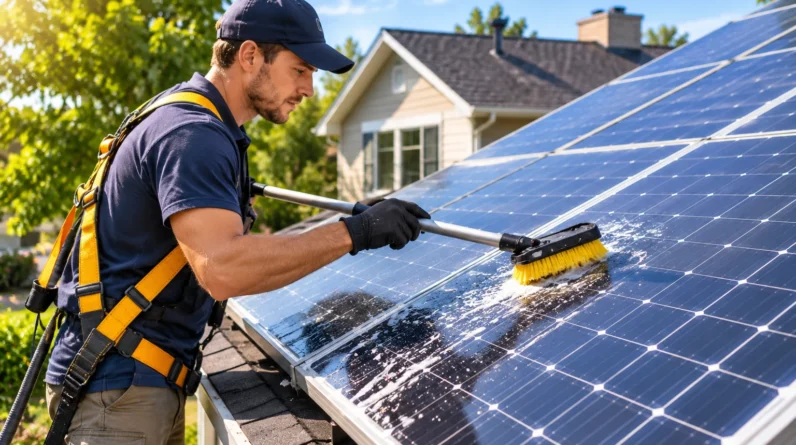
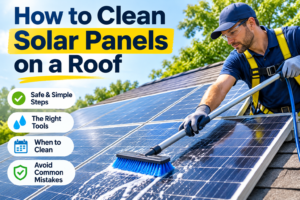
Image 1 – Place after this section
Suggested image: A professional solar panel technician using a long-handled water-fed brush to clean a residential rooftop solar installation.
ALT text: Professional technician cleaning rooftop solar panels using a soft water-fed cleaning brush.
5. What Should You Avoid When Cleaning Solar Panels?
Using the wrong cleaning equipment or methods can damage the solar panels and create unnecessary safety risks.
Here are some important mistakes to avoid.
Never use a high-pressure washer
High-pressure water can damage seals, connections or other sensitive components if used incorrectly.
A gentle water flow is generally more appropriate for routine cleaning.
Do not assume that a pressure washer is safe simply because it has an adjustable setting.
Avoid abrasive brushes and cleaning pads
Solar panel glass is designed to withstand outdoor conditions, but abrasive cleaning equipment can scratch its surface.
Avoid:
- Steel wool.
- Metal brushes.
- Scouring pads.
- Abrasive sponges.
- Scrapers.
- Stiff cleaning brushes.
Use a soft brush or sponge approved for your panels instead.
Do not use harsh chemicals
Avoid household chemicals such as:
-
- Bleach.
- Ammonia-based cleaners.
- Strong solvents.
- Abrasive cleaning powders.
- Unapproved glass-cleaning products.
In summary, knowing how to clean solar panels on a roof can save you money and improve efficiency.
These products may damage coatings, seals or other materials, or leave residues on the panel surface.
Use only cleaning products permitted by the manufacturer.
Never walk or stand on solar panels
Solar panels are not designed to support a person’s weight.
Walking, kneeling or standing on them can damage the glass, cells and internal connections.
Even if a panel does not visibly crack, physical stress can cause damage that affects its long-term performance.
Never clean damaged panels or exposed wiring
If you see cracked glass, damaged insulation, exposed cables or signs of electrical arcing, stop.
Do not spray water onto the damaged area or attempt repairs.
Contact a qualified solar technician.
Image 2 – Place after this section
Suggested image: A close-up comparison showing a soft solar cleaning brush and clean water beside unsuitable abrasive tools and a high-pressure washer, clearly illustrating what should and should not be used.
ALT text: Appropriate soft solar panel cleaning brush and water compared with abrasive tools and high-pressure washing equipment to avoid.
6. Should You Clean Solar Panels Yourself or Hire a Professional?
Ultimately, the decision on how to clean solar panels on a roof depends on your specific situation.
This is one of the most important decisions homeowners should make before cleaning rooftop solar panels.
Although some accessible installations can be cleaned from the ground, cleaning a roof-mounted system is not always a suitable DIY task.
When DIY cleaning may be suitable
A homeowner may be able to clean panels without climbing onto the roof when:
- The installation can be reached safely from ground level.
- A suitable telescopic cleaning pole is available.
- There are no visible electrical or structural problems.
- The manufacturer’s instructions permit the proposed method.
- The surrounding ground is stable and free from hazards.
Even in these circumstances, do not use a cleaning method that requires stretching, leaning or working near overhead electrical equipment.
When professional cleaning is recommended
Hiring a qualified professional is the better choice when:
- Panels are installed on a steep roof.
- The roof is several stories high.
- The installation is difficult to access.
- There is substantial dirt or stubborn debris.
- You are unfamiliar with rooftop electrical equipment.
- The panels appear damaged.
- Special cleaning equipment or safety systems are required.
Professional cleaners should have appropriate training, insurance and fall-protection equipment.
Why roof safety matters
Before attempting this, remember how to clean solar panels on a roof safely.
A wet roof can become extremely slippery.
Working around solar panels also introduces electrical hazards, particularly when water and damaged electrical components are involved.
For these reasons, homeowners should not climb onto a roof simply to save the cost of a cleaning service.
A professional cleaning company can assess the installation and determine the safest method.
Image 3 – Place after this section
Suggested image: A qualified solar maintenance professional inspecting a rooftop solar array from a safe working position, using appropriate fall-protection equipment.
ALT text: Qualified solar maintenance professional inspecting a residential rooftop solar panel installation with appropriate safety equipment.
7. How to Keep Solar Panels Cleaner for Longer
Although some dirt accumulation is unavoidable, homeowners can take practical steps to reduce unnecessary buildup.
Maintain nearby vegetation
Trees and shrubs can contribute leaves, pollen, seeds and bird activity.
Where appropriate, maintain nearby vegetation to reduce debris around the solar installation.
Never carry out unsafe tree work close to rooftop equipment or electrical installations.
Monitor your solar electricity production
Use your solar monitoring app to check electricity generation.
Compare production under similar weather and seasonal conditions.
If output decreases unexpectedly, investigate possible causes such as shading, equipment problems or soiling.
Inspect panels after unusual weather
Consider checking your installation after:
-
- Dust storms.
- Heavy pollen seasons.
Understanding the environment will further inform how to clean solar panels on a roof.
- Nearby construction work.
- Agricultural activity.
- Significant leaf accumulation.
- Other events that may deposit debris on the panels.
Follow a condition-based maintenance approach
There is no reason to clean solar panels unnecessarily.
The Pacific Northwest National Laboratory explains that cleaning needs vary with rainfall, panel angle and local air pollution.
Some installations may need occasional cleaning, while others can remain sufficiently clean through natural rainfall.
The goal is to maintain good performance without introducing unnecessary cleaning costs or safety risks.
To conclude, being informed about how to clean solar panels on a roof is crucial for any homeowner.
For more information, read our separate guide:
How Often Should You Clean Solar Panels?
8. How Much Does Professional Solar Panel Cleaning Cost?
The cost of professional solar panel cleaning depends on several factors, including:
- Number of solar panels.
- Roof height and accessibility.
- Roof design and slope.
- Amount of dirt or debris.
- Cleaning equipment required.
- Local labor rates.
- Travel and service charges.
A straightforward ground-accessible installation may require less work than a large system installed on a steep or difficult-to-access roof.
Before hiring a cleaning company, ask for a clear quote explaining what is included.
For a detailed breakdown of cleaning expenses, see our existing guide:
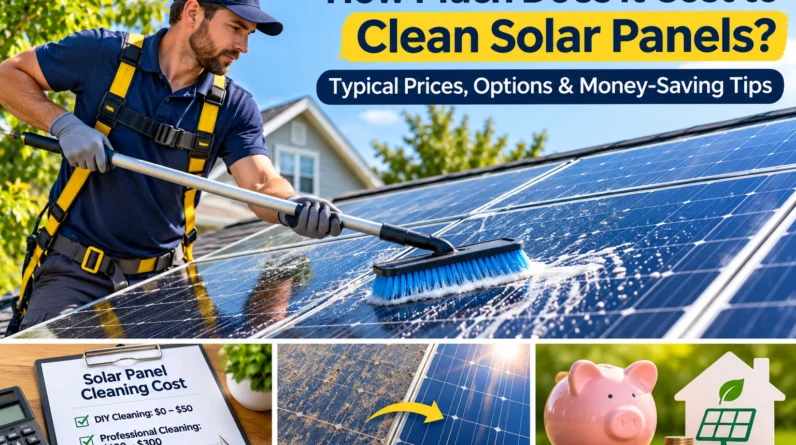
How Much Does It Cost to Clean Solar Panels?
Conclusion: Clean Solar Panels Safely and Carefully
Cleaning rooftop solar panels can help remove accumulated dust, pollen, bird droppings and other debris that may interfere with electricity generation.
For many residential installations, clean water and a suitable soft brush are sufficient when cleaning is necessary.
However, the method matters just as much as the equipment.
Avoid high-pressure washing, abrasive tools and harsh chemicals. Never walk on solar panels or attempt to clean damaged electrical components.
Where possible, use a suitable ground-based cleaning method. If the panels are difficult to reach or the roof presents a safety risk, hire a qualified professional.
A careful, condition-based approach will help protect your solar investment while avoiding unnecessary damage and injury.
Frequently Asked Questions
1. What is the best way to clean solar panels on a roof?
For accessible installations, a gentle rinse with clean water followed by light brushing with a soft, non-abrasive brush may be suitable. Always follow the panel manufacturer’s instructions. If the roof is difficult or unsafe to access, hire a professional.
2. Can I clean solar panels with a garden hose?
A garden hose with a gentle spray setting can be suitable for rinsing loose dirt from accessible panels. Avoid directing water toward electrical connections, exposed wiring or damaged components.
3. Can I use soap to clean solar panels?
Not all solar panel manufacturers permit soap or cleaning detergents. Some recommend using water alone. Check the manufacturer’s cleaning instructions before applying any cleaning product.
4. Can I use a pressure washer on solar panels?
High-pressure washers are generally not recommended for routine solar panel cleaning. High-pressure water may damage seals or sensitive components. Use a gentle water flow and follow manufacturer guidance.
5. Can I walk on solar panels while cleaning them?
No. Solar panels are not designed to support a person’s weight. Walking or kneeling on them can damage the glass and internal photovoltaic cells.
6. Can I clean solar panels myself without climbing onto the roof?
In some situations, yes. A telescopic water-fed cleaning pole may allow you to reach accessible rooftop panels from the ground. If you cannot reach the entire installation safely, use a professional service.
7. Should solar panels be cleaned with hot or cold water?
Use water at a temperature permitted by the manufacturer. Avoid applying cold water to panels that have become extremely hot in direct sunlight, as sudden temperature changes may cause thermal stress.
8. Do I need to turn off my solar panel system before cleaning?
Follow the manufacturer’s and installer’s shutdown instructions. Solar panels can continue generating electricity in daylight even when the system has been switched off. Do not handle electrical components or assume that shutdown eliminates all electrical hazards.
9. Can dirty solar panels reduce electricity production?
Yes. Significant dust, pollen, bird droppings and other deposits can block sunlight from reaching the photovoltaic cells. The effect varies according to the type and amount of dirt and local conditions.
10. Is professional solar panel cleaning worth it?
Professional cleaning can be worthwhile when panels are difficult to access, heavily soiled or installed on a steep roof. It can also help homeowners avoid the risks associated with working at height and around electrical equipment.
Key Takeaways
Remember that regularly considering how to clean solar panels on a roof will keep your system efficient.
- Clean solar panels only when dirt or debris makes cleaning worthwhile.
- Use clean water and a soft, non-abrasive brush when permitted by the manufacturer.
- A telescopic water-fed pole may allow suitable cleaning from the ground.
- Avoid high-pressure washers, abrasive tools and harsh chemicals.
- Never walk or stand on solar panels.
- Do not clean damaged panels or exposed electrical wiring.
- Hire a qualified professional for difficult or unsafe rooftop installations.
- Follow manufacturer instructions to protect your system and warranties.
Related Resources
Explore more solar panel maintenance and homeowner guides:
Our guide offers detailed information on how to clean solar panels on a roof thoroughly.
Sources and Further Reading
-
- Energy Saving Trust – How to Clean and Maintain Solar Panels
- Pacific Northwest National Laboratory – Solar Photovoltaic Operations and Maintenance
- LG USA – How to Clean Solar Modules
- American Solar Energy Society – Solar Performance, Buying, Reliability and Maintenance
- New York State Energy Research and Development Authority – Resources for Solar Owners
- U.S. Department of Energy – Operations and Maintenance of Existing Photovoltaic Systems
To read more on how to clean solar panels on a roof, check our linked resources.
For more details on how to clean solar panels on a roof, visit: https://www.youtube.com/watch?v=EMhkjHlk3VA