Solar Panel Disposal and Recycling: A Guide to End-of-Life Panels
Solar panels are designed to generate electricity for many years, but they do not last forever. Eventually, panels may need to be removed because of age, damage, declining performance, system upgrades or the replacement of an entire solar installation.
What happens to those panels when they are no longer needed? Can they be recycled, reused or safely disposed of? And what happens to the glass, silicon, aluminium and other materials inside them?
Solar panel disposal and recycling are becoming increasingly important as the number of photovoltaic installations grows. Recovering materials can reduce waste and help limit demand for newly extracted resources, but recycling is not always straightforward or economically attractive.
This guide explains what happens when solar panels reach the end of their useful lives, how recycling works, which materials can be recovered and what homeowners and solar project operators should consider before disposing of old panels.
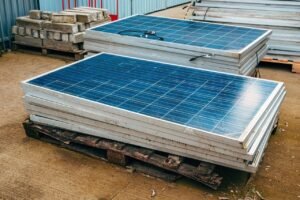
1. When do solar panels reach the end of their useful life?
Solar panels are built to operate for decades. Their electricity output generally declines gradually over time rather than stopping suddenly when they reach a particular age.
The U.S. Department of Energy reports that the average operational lifespan of a solar panel has increased to approximately 25–35 years, based on a survey of U.S. solar industry professionals.
However, a panel may be removed before reaching the end of its expected operating life. Common reasons include:
- Age and degradation: Electricity production may decline over time, making replacement or system upgrades attractive.
- Physical damage: Hail, storms, fire, impact or other events may damage panels beyond economical repair.
- System upgrades: Owners may replace older modules with newer, more efficient equipment.
- Repowering: Large solar farms may replace older panels or other components to improve system performance.
- Property or project changes: A building renovation, land-use agreement or project closure may require removal.
- Electrical or installation problems: Defects or installation issues may lead to early replacement.
It is important to distinguish between a panel reaching the end of its warranty and a panel becoming unusable. A panel may continue generating electricity after its warranty period has expired.
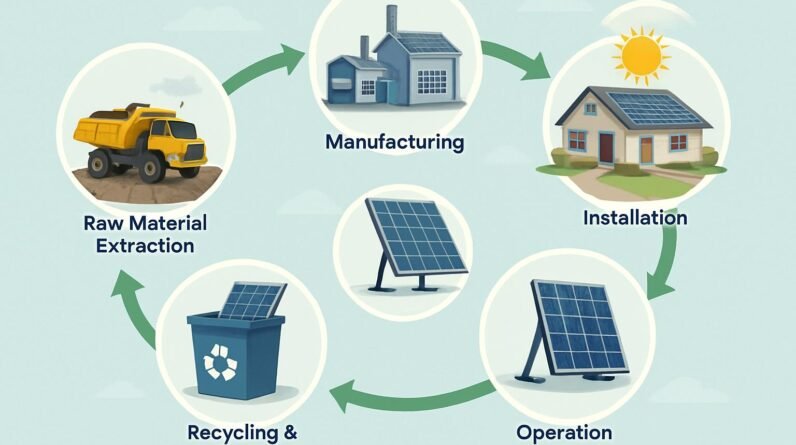
2. What happens to old solar panels?
When a solar panel is removed from service, recycling is not necessarily the first or only option. Its condition and remaining performance determine what can happen next.
There are four main end-of-life pathways:
Reuse
A panel that remains functional may be suitable for another application. It can be inspected, tested and sold or transferred for legitimate reuse if its condition and electrical performance are appropriate.
Reuse can extend the useful life of the equipment and delay the need to recover or dispose of its materials.
Repair or refurbishment
Some panels or solar system components may be repairable. Depending on the damage, replacing certain components or refurbishing equipment may allow it to return to service.
Repair is not always practical, particularly where the photovoltaic module itself is damaged or where electrical safety cannot be assured.
Repowering or replacement
Solar farms and other larger installations may replace older modules with newer technology while retaining some existing infrastructure. This is often called repowering.
Removed panels should be assessed individually to determine whether they can be reused, refurbished, recycled or disposed of appropriately.
Recycling or disposal
Panels that cannot reasonably be reused or repaired may be sent to a suitable recycling facility. Any materials that cannot be recovered may require appropriate disposal under applicable waste regulations.
The U.S. Department of Energy describes these options as part of end-of-life management for photovoltaic systems.
3. Can solar panels be recycled?
Yes. Solar panels can be recycled, and recycling processes exist for both conventional crystalline-silicon modules and certain thin-film technologies.
However, solar panel recycling is more complicated than recycling a simple glass or aluminium product because photovoltaic modules combine several materials into a durable, bonded structure.
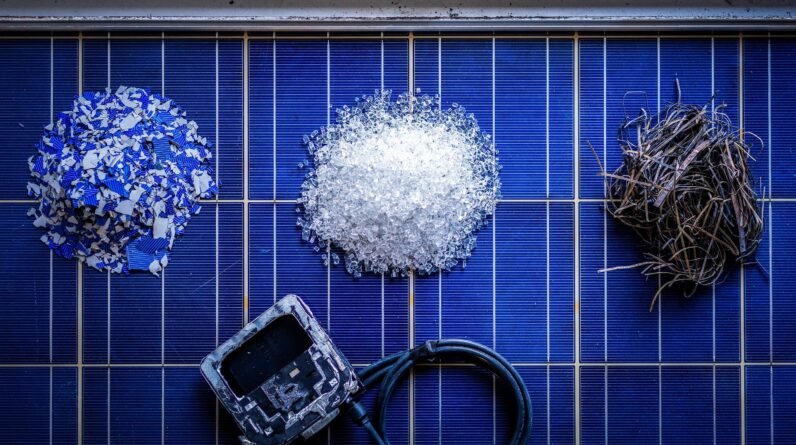
A typical crystalline-silicon module contains:
- Glass protecting the front of the panel.
- Silicon photovoltaic cells.
- An aluminium frame.
- Copper electrical connections.
- Silver and other metals in electrical contacts.
- Polymer encapsulants and protective backing materials.
These materials need to be separated before many of them can be recovered at useful purity levels.
The U.S. Environmental Protection Agency explains that solar panel recycling may involve removing the frame and junction box, separating glass from the silicon cells and using additional processes to recover metals and other valuable components.
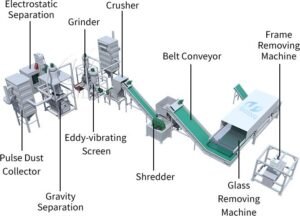
4. How does the solar panel recycling process work?
Recycling facilities use different methods depending on the type of module, available equipment and the materials they want to recover.
For conventional crystalline-silicon panels, the process may involve several stages.
Step 1: Collection and inspection
Retired panels are collected and inspected. Panels that may still be suitable for reuse or repair should be separated from those that are damaged or no longer suitable for electricity generation.
Proper identification is important because panel technology and condition influence the appropriate recycling or disposal route.
Step 2: Removing the frame and junction box
The aluminium frame and electrical junction box are removed where possible. These components can be separated from the main module and sent for suitable material recovery.
Step 3: Separating glass and photovoltaic cells
The remaining module contains layers of glass, encapsulant, photovoltaic cells and backing materials bonded together.
Thermal, mechanical or chemical processes may be used to separate these layers. The selected method depends on the recycling facility and the module design.
Step 4: Recovering silicon and metals
Additional processing can be used to recover silicon cells and valuable metals such as silver, copper, tin and lead.
Some advanced methods aim to improve the purity and recovery rate of these materials, making them more suitable for use in future manufacturing.
Step 5: Managing remaining materials
Not every component can necessarily be recovered economically. Residual materials need to be assessed and managed in accordance with applicable waste requirements.
The EPA identifies frame and junction-box removal, glass and silicon separation, and further recovery of cells and specialty metals as key stages in solar panel recycling.
5. Which materials can be recovered from old solar panels?
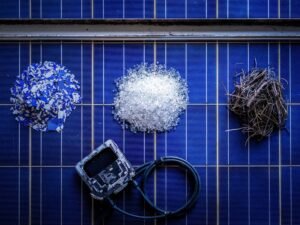
Several materials in retired solar panels can be recovered and potentially used again. The actual recovery rate depends on the recycling technology, panel design and economic value of each material.
| Material | Potential recovery route | Why recovery matters |
|---|---|---|
| Glass | Separated and processed for suitable reuse or recycling | Reduces demand for virgin glass raw materials |
| Aluminium | Frames are removed and sent for metal recycling | Can reduce demand for primary aluminium production |
| Copper | Recovered from wiring and electrical components | Returns a valuable electrical metal to the supply chain |
| Silver | Recovered through specialised cell-processing methods | Can reduce demand for newly mined silver |
| Silicon | Separated and processed for possible material recovery | May provide a secondary source of semiconductor material |
| Tin and lead | May be recovered or managed through specialised processing | Supports responsible handling of metals in electrical connections |
Recovery does not mean every material is automatically suitable for manufacturing a new solar panel. Some recovered materials require further purification, and others may be used in different industrial applications.
The IEA PVPS report Advances in Photovoltaic Module Recycling: Third Update to Empirical Life Cycle Inventory Data, published in April 2026, reports improvements in material recovery, process yields and output purity compared with earlier studies.
It also highlights the potential of advanced thermal, chemical and mechanical processes to recover valuable materials such as silicon and silver.
6. Why is solar panel recycling still challenging?
Although recycling technologies exist, solar panel recycling has several practical and economic challenges.
Bonded materials are difficult to separate
Solar modules are designed to withstand decades of outdoor exposure. Glass, cells and protective layers are bonded together to protect the photovoltaic components.
This durable construction makes panels reliable during operation, but it also makes material separation more difficult at the end of their useful lives.
Recycling can be more expensive than disposal
The U.S. Department of Energy reports that the total cost of recycling solar panels in the United States is still generally greater than the cost of disposing of them in a landfill.
This creates an economic barrier, particularly when recovered materials do not generate enough revenue to cover collection, transportation and processing costs.
Not all materials have the same recovery value
Aluminium, copper and silver have established industrial uses and can provide valuable recovery opportunities. Other components may be more difficult or expensive to recover at a commercially attractive quality.
Collection and transport infrastructure is still developing
Panels removed from homes and large solar farms need to reach appropriate collection and recycling facilities. Transport distances and limited local availability can increase costs.
Panel designs and technologies vary
Recycling processes must account for differences between crystalline-silicon and thin-film modules, as well as changes in panel construction over time.
These factors explain why recycling is technically possible but is not yet a simple or universal solution for every retired panel.
7. What happens if solar panels are sent to landfill?
Panels that are not reused or recycled may be sent to an authorised disposal facility, depending on their characteristics and applicable regulations.
Landfill disposal can mean that valuable materials such as glass, aluminium, silicon, copper and silver are lost from the manufacturing supply chain.
There may also be environmental and regulatory concerns if a discarded panel contains metals at concentrations that meet hazardous-waste criteria.
For example, some panels may contain lead or cadmium in their components. The presence of these substances does not automatically mean every panel is hazardous waste, but it makes proper waste assessment and handling important.
The EPA explains that some discarded solar panels qualify as hazardous waste under the Resource Conservation and Recovery Act (RCRA), while others do not. The result depends on the panel’s characteristics and applicable regulatory testing.
Sending suitable panels for legitimate reuse or recycling can help preserve materials and reduce unnecessary disposal. However, recycling should be carried out through an appropriate facility rather than an informal dismantling operation.
8. Are old solar panels hazardous waste?
Not all old solar panels are classified as hazardous waste in the United States.
Under federal RCRA rules, a discarded solar panel is solid waste. Whether it is also hazardous waste depends on whether it exhibits a hazardous characteristic, such as toxicity, under the applicable regulatory requirements.
Some panels contain metals such as lead or cadmium. If these are present at levels that meet the relevant hazardous-waste criteria, the panel may need to be managed as hazardous waste.
Other panels may not meet those criteria.
It is also important to distinguish between a panel that is still being used and one that has been discarded. The EPA explains that properly functioning solar panels are safe during normal use and that their encapsulation protects the internal materials.
For homeowners and businesses, the correct disposal route depends on the panel, the reason for removal and the applicable federal, state and local requirements.
Do not assume that an old panel can automatically be placed in ordinary household rubbish or a standard recycling bin.
9. Solar panel recycling regulations in the United States
Solar panel waste management in the United States is influenced by federal, state and local rules.
At the federal level, discarded panels fall under the Resource Conservation and Recovery Act. Panels that meet hazardous-waste criteria must be managed according to the relevant hazardous-waste requirements, unless a specific exclusion or alternative management standard applies.
State rules can be more specific or more stringent. Some states have introduced policies or programmes addressing the collection, handling and recycling of photovoltaic modules.
Examples identified by the EPA include:
- California: State universal-waste requirements for photovoltaic modules.
- Hawaii: State universal-waste regulations for solar panels.
- New Jersey: A Solar Panel Recycling Commission.
- Washington: A photovoltaic module stewardship and take-back programme.
This is not a complete list of state policies, and regulations can change. Owners and operators should check the requirements that apply where their panels are located.
The EPA has also been working on a proposed approach to add hazardous-waste solar panels to the federal universal-waste regulations. A proposal or regulatory planning entry should not be confused with a final rule. Check the latest EPA status before relying on a particular federal requirement.
For official guidance, see the EPA’s End-of-Life Solar Panels: Regulations and Management.
10. What should homeowners do with old solar panels?
Homeowners should not remove or dispose of solar panels without considering electrical safety, system condition and local waste requirements.
If a panel needs to be replaced, these steps can help:
- Contact the original installer: Ask whether the panel can be inspected, repaired or replaced under an existing warranty.
- Check whether reuse is possible: A panel that still works may have a legitimate second-life application.
- Ask about manufacturer take-back programmes: Some manufacturers or suppliers may offer collection or recycling options.
- Find an appropriate recycling facility: Confirm that the facility accepts the particular type of solar panel.
- Check local rules: Contact the relevant state or local environmental agency about disposal and recycling requirements.
- Use qualified professionals: Panels are electrical equipment and should be safely disconnected and removed by suitable professionals.
Homeowners should also keep records of panel removal, reuse or recycling where appropriate, particularly when required for warranties, insurance or property documentation.
11. How large solar farms manage end-of-life panels
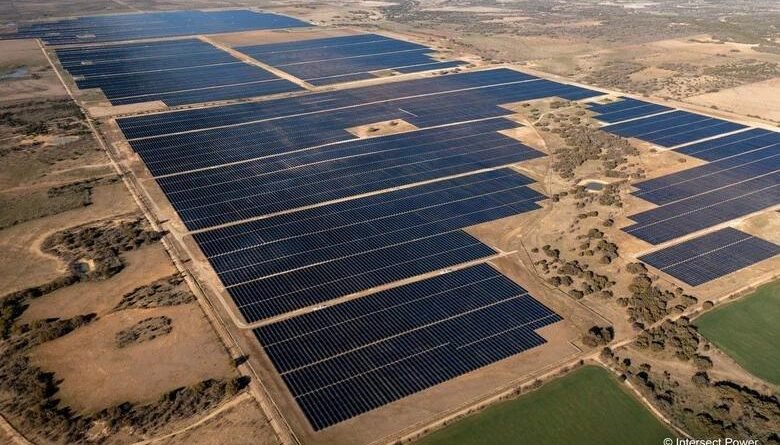
Utility-scale solar projects have more complex end-of-life requirements because they may involve thousands or millions of modules, along with mounting structures, inverters, cables and other equipment.
Decommissioning plans should be considered when the project is developed rather than left until the system is ready to close.
A project end-of-life plan may address:
- Inspection and assessment of retired equipment.
- Separation of reusable, repairable and damaged panels.
- Safe disconnection and removal of electrical equipment.
- Transportation to suitable recycling or disposal facilities.
- Recovery of metals and other reusable materials.
- Management of non-recyclable waste.
- Removal of infrastructure and restoration of the project site where required.
The U.S. Department of Energy recommends planning for decommissioning and considering recycling and other end-of-life options as part of the photovoltaic system lifecycle.
Project contracts, land-use agreements and permitting requirements may also specify who is responsible for removing equipment and restoring the site.
12. How recycling can support a circular solar industry
A circular economy aims to keep products and materials in use for as long as practical, reducing waste and the need for new raw materials.
For solar technology, this involves more than simply recycling panels after they stop generating electricity.
A circular approach can include:
- Longer product lifetimes: Maintaining and repairing panels where appropriate.
- Reuse: Giving suitable panels a second life in another application.
- Design for recycling: Developing modules that are easier to disassemble and process.
- Material recovery: Recovering glass, aluminium, copper, silicon and valuable metals.
- Recycled material use: Incorporating suitable recovered materials into new products.
- Better collection systems: Making it easier for owners and operators to send retired panels to appropriate facilities.
The IEA PVPS 2026 recycling report highlights improvements in recovery processes and the importance of better data transparency. These developments could help the solar industry move towards more effective material recovery as larger quantities of panels eventually reach the end of their useful lives.
13. Is solar panel recycling environmentally beneficial?
Recycling can provide important environmental benefits, but its value depends on what materials are recovered, how efficiently they are processed and what happens to the recovered outputs.
Potential benefits include:
- Reducing the quantity of solar panel waste sent to landfill.
- Recovering valuable materials for reuse in manufacturing.
- Reducing demand for some newly extracted raw materials.
- Supporting more circular supply chains.
- Reducing some environmental impacts associated with producing virgin materials.
However, recycling itself also requires energy, transport and processing. A recycling facility must manage emissions, residual waste and worker safety, and the benefits depend on the quality and usefulness of the recovered materials.
The strongest environmental case comes from a combination of longer panel lifetimes, legitimate reuse, efficient recycling and responsible management of materials that cannot be recovered.
Frequently Asked Questions
Can old solar panels be recycled?
Yes. Solar panels can be recycled using mechanical, thermal and chemical processes. These methods can recover materials such as glass, aluminium, copper, silicon and certain specialty metals, although recovery rates vary.
What happens to solar panels after 25 years?
A panel does not automatically become unusable after 25 years. It may continue producing electricity, be reused, repaired or replaced. If it is retired, it can be assessed for recycling or appropriate disposal.
Are solar panels 100% recyclable?
No universal 100% recovery rate applies to all solar panels. Many components can be recovered, but the process depends on the panel design, recycling technology, material purity and economic conditions.
Which parts of solar panels can be recycled?
Glass, aluminium frames, copper, silver and some silicon can be recovered. The exact materials and recovery methods depend on the photovoltaic technology and the recycling facility.
Are old solar panels hazardous waste?
Not necessarily. Under U.S. federal rules, some discarded panels meet hazardous-waste criteria because of metals such as lead, while others do not. State requirements may also differ.
Can I put old solar panels in my household recycling bin?
Do not assume that ordinary household recycling programmes accept solar panels. Contact your installer, local recycling authority or state environmental agency to identify an appropriate collection or recycling route.
Why is solar panel recycling expensive?
Panels contain bonded layers that can be difficult to separate. Collection, transport, processing and purification all add costs, and the market value of recovered materials may not cover the full recycling expense.
Can solar panels be reused instead of recycled?
Yes. Panels that remain safe and functional may be reused in another application. Reuse can extend their useful life and delay the need for recycling or disposal.
Do solar panel manufacturers offer recycling programmes?
Some manufacturers and suppliers offer take-back or recycling services, but availability varies by company, product and location. Owners should check directly with their manufacturer or installer.
What happens to solar panels that cannot be recycled?
Residual materials that cannot be recovered need to be managed under applicable waste rules. Depending on the panel’s characteristics and local requirements, this may involve an authorised disposal facility or hazardous-waste management route.
Key Takeaways
- Solar panels are designed to operate for decades, but they may be retired early because of damage, upgrades or project changes.
- Old panels may be reused, repaired, refurbished, recycled or disposed of appropriately.
- Recycling processes can recover glass, aluminium, copper, silicon, silver and other materials.
- Bonded panel construction, transport costs and material recovery economics make recycling challenging.
- Not all discarded solar panels are hazardous waste, but their characteristics and applicable local rules must be considered.
- Federal, state and local requirements can differ, so owners should check the rules that apply to their location.
- Longer lifetimes, reuse, improved recycling and better product design can support a more circular solar industry.
Related Resources
- Environmental Impact of Solar Energy: From Manufacturing to Recycling
- Solar Panel Materials and Environmental Impact
- Solar Panel Manufacturing and Environmental Impact
- Mining Materials for Solar Panels: Environmental Effects
- Hidden Environmental Costs of Solar Energy
- Negative Environmental Effects of Solar Energy
- Water Use and Solar Energy
Further Reading and Sources
- U.S. Environmental Protection Agency – Solar Panel Recycling
- U.S. Environmental Protection Agency – End-of-Life Solar Panels: Regulations and Management
- U.S. Environmental Protection Agency – Solar Panel Frequently Asked Questions
- U.S. Department of Energy – End-of-Life Management for Solar Photovoltaics
- IEA PVPS (April 2026) – Advances in Photovoltaic Module Recycling: Third Update to Empirical Life Cycle Inventory Data
- U.S. Department of Energy – Life Cycle of Photovoltaic Systems: Prepare for the End of a Performance Period