Solar Panel Manufacturing and Environmental Impact
Solar panels generate electricity without burning fossil fuels during normal operation. However, producing the panels requires industrial processes, raw materials, energy and water. These manufacturing activities create environmental impacts that are important to understand when evaluating solar energy as a sustainable power source.
Understanding the solar panel manufacturing environmental impact is crucial for making informed energy choices.
From purifying silicon to assembling finished photovoltaic modules, every manufacturing stage requires resources and careful environmental management. The amount of energy consumed, the electricity used by factories, the chemicals involved and the efficiency of production can all influence the final environmental footprint of a solar panel.
Each step in the solar panel manufacturing environmental impact adds to the overall ecological footprint.
So, how environmentally friendly is solar panel manufacturing? And how do its impacts compare with the long-term benefits of generating electricity from sunlight?
This guide explains the main stages of solar panel production, the environmental concerns associated with each stage and how manufacturers are working to reduce their impact.
By analyzing the solar panel manufacturing environmental impact, we can identify ways to improve sustainability.
1. How are solar panels manufactured?
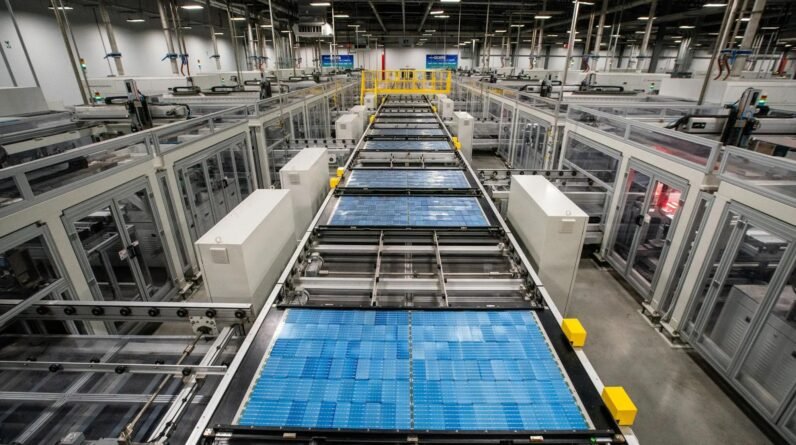
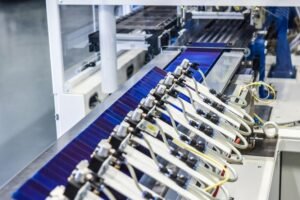
Most commercially available solar panels use crystalline silicon photovoltaic technology. Their production involves transforming raw materials into highly specialised components that can convert sunlight into electricity.
The main manufacturing stages for a conventional crystalline-silicon panel are:
- Silicon production: Quartz-based raw material is processed to produce metallurgical-grade silicon.
- Polysilicon purification: The silicon is refined to achieve the high purity required for photovoltaic applications.
- Ingot production: High-purity silicon is melted and formed into crystalline ingots.
- Wafer production: The ingots are sliced into thin silicon wafers.
- Solar cell processing: Wafers undergo chemical and thermal treatments and receive electrical contacts.
- Module assembly: Solar cells are connected and protected between glass and other materials, then framed and fitted with electrical components.
These stages may take place in different factories and countries. The finished module is only one part of a wider supply chain that also includes mounting structures, wiring, inverters and other equipment.
These components significantly influence the solar panel manufacturing environmental impact, making efficiency vital.
The U.S. Department of Energy describes these stages in its overview of solar photovoltaic manufacturing.
2. Energy consumption during solar panel production
One of the most important environmental concerns associated with solar panel manufacturing is the amount of energy required to produce the materials and components.
The solar panel manufacturing environmental impact largely hinges on energy choices during production.
Manufacturing high-purity silicon is particularly energy-intensive. Producing polysilicon, growing crystalline ingots and slicing wafers all require industrial equipment and substantial electricity or heat.
Other stages, including cell processing and module assembly, also consume energy. The production of glass, aluminium frames and other components adds to the overall demand.
The environmental consequences depend partly on the energy source used by the factory. A manufacturing facility powered by a coal-intensive electricity grid can produce more greenhouse gas emissions than a comparable facility using a cleaner electricity supply.
Research published by the National Renewable Energy Laboratory identifies polysilicon purification and ingot and wafer production as particularly electricity-intensive stages in crystalline-silicon manufacturing.
This is one reason the manufacturing location and its electricity mix matter when assessing the environmental performance of solar panels.
Ultimately, assessing the solar panel manufacturing environmental impact helps us push for greener technologies.
3. Greenhouse gas emissions from solar panel manufacturing
Evaluating the solar panel manufacturing environmental impact reveals important trade-offs in the lifecycle of the technology.
Solar panels do not release greenhouse gases while converting sunlight into electricity. However, emissions can occur before a panel is installed.
Manufacturing-related emissions can come from:
- Electricity consumed by manufacturing facilities.
- Heat generated using natural gas or other fuels.
- Industrial processes involved in producing silicon and other materials.
- Manufacturing glass, aluminium and electrical components.
- Transporting materials and finished products between factories.
The carbon footprint of a solar panel therefore depends on more than its technical efficiency. The production process, energy supply, material requirements and supply-chain logistics all influence its embodied emissions.
This indicates how the solar panel manufacturing environmental impact can vary based on production practices.
A 2023 study of the U.S. solar photovoltaic supply chain estimated embodied greenhouse gas emissions associated with panel materials, manufacturing, logistics and installation. Its results demonstrate that manufacturing and upstream activities are important contributors to the lifecycle emissions of solar electricity.
The solar panel manufacturing environmental impact should always be weighed against its long-term energy benefits.
Nevertheless, these emissions must be considered over the full operating life of a solar system. Solar panels can generate electricity for decades without the direct combustion emissions associated with fossil-fuel power generation.
Read our detailed comparison of solar panels’ carbon footprint compared with fossil fuels.
4. Chemicals used in solar panel manufacturing
Solar panel production involves specialised chemicals that help create and process photovoltaic cells. These substances are used in different ways depending on the technology and manufacturing method.
For crystalline-silicon panels, manufacturing can involve chemicals and gases used during purification, surface treatment, cleaning, texturing and cell processing.
These materials are not automatically released into the environment simply because they are used in a factory. However, improper storage, handling, treatment or disposal can create risks for workers, nearby communities and the environment.
Responsible manufacturing therefore requires:
Effective management practices can mitigate the solar panel manufacturing environmental impact significantly.
- Appropriate chemical storage and handling procedures.
- Worker protection and industrial safety controls.
- Wastewater treatment and monitoring.
- Safe management of chemical by-products.
- Compliance with applicable environmental regulations.
Different photovoltaic technologies also use different semiconductor materials. Some thin-film technologies, for example, contain substances that require particular care during manufacturing and end-of-life management.
It is important not to assume that every solar panel contains the same chemicals or has identical waste-management requirements. The technology and manufacturing process determine which materials are involved.
5. Water consumption in solar panel manufacturing
Water is another important resource used in photovoltaic production. Some manufacturing stages require water for cleaning, processing and maintaining controlled production conditions.
Water use can vary according to the factory, technology, manufacturing process and production efficiency. It is therefore difficult to apply a single water-consumption figure to every solar panel.
The solar panel manufacturing environmental impact can also hinge on local water availability and regulations.
A 2025 research paper examining photovoltaic module manufacturing at a terawatt scale found substantial variation among published estimates. It also highlighted the need for more accurate and up-to-date manufacturing data.
The local context matters too. A factory using public water supplies in a water-stressed region may create different concerns from one operating where water resources are more readily available.
Manufacturers can reduce potential impacts by improving water efficiency, reusing suitable process water and treating wastewater before discharge.
6. Material waste during solar cell and panel production
Manufacturing solar panels requires precision, and not every raw material becomes part of a finished product.
One example is silicon wafer production. Silicon ingots are sliced into thin wafers, and this process can produce material losses known as kerf loss. Additional silicon may be removed when the ends and edges of ingots are trimmed.
Other manufacturing stages can also generate:
- Silicon and wafer production scrap.
- Broken or defective solar cells.
- Glass and aluminium offcuts.
- Packaging materials.
- Chemical residues and industrial wastewater.
These materials do not all have to become waste. Some manufacturing scrap can be recovered, reused or recycled, depending on its condition and the available processing technology.
Research and development efforts have focused on reducing silicon losses during wafer production, improving manufacturing yields and recovering valuable materials from production waste.
Careful planning can help reduce the solar panel manufacturing environmental impact through waste management.
7. Does solar panel manufacturing affect air and water quality?
Industrial production can affect local air and water quality if emissions and waste streams are not properly controlled.
Potential concerns include emissions from energy generation, industrial processing, chemical handling and the treatment of manufacturing waste. Poorly managed wastewater or chemical releases can also create environmental risks.
However, these impacts depend on the factory’s processes, pollution-control equipment, regulatory requirements and environmental management practices.
It would be misleading to assume that all solar panel factories have the same environmental performance. Modern facilities with effective controls can manage many of the risks associated with industrial production.
Environmental monitoring, safe chemical management, wastewater treatment and transparent reporting are important for reducing manufacturing-related pollution.
Companies must address the solar panel manufacturing environmental impact through best practices in chemical use.
8. Does the manufacturing country change a solar panel’s environmental impact?
Yes. The country and region where a solar panel is manufactured can influence its environmental footprint.
One major factor is the electricity mix used by the factory. Producing the same type of solar module with electricity from a carbon-intensive grid can result in higher manufacturing emissions than producing it with lower-carbon electricity.
Other factors include:
-
- Energy efficiency of manufacturing equipment.
- Access to cleaner electricity and industrial heat.
- Water availability and factory water-management practices.
- Environmental regulations and enforcement.
- Manufacturing yields and material efficiency.
The solar panel manufacturing environmental impact must also consider transportation logistics and their efficiency.
- Transportation distances between supply-chain stages.
Manufacturing location should not be treated as the only measure of environmental performance. A proper comparison needs consistent lifecycle data and should consider the actual production methods and energy sources involved.
9. How manufacturers can reduce the environmental impact of solar panel production
Solar manufacturers can improve environmental performance through changes to energy use, materials, production methods and waste management.
Use lower-carbon electricity
Factories can reduce manufacturing-related greenhouse gas emissions by improving energy efficiency and using electricity from lower-carbon sources, including renewable energy.
Improve silicon purification and wafer efficiency
Reducing energy consumption during silicon purification and minimising material losses during wafer production can lower the resources required for each finished panel.
Reduce water consumption
Innovations aimed at reducing the solar panel manufacturing environmental impact are essential for future sustainability.
More efficient production processes, water reuse and improved wastewater treatment can help reduce pressure on local water supplies.
Improve chemical management
Appropriate storage, handling, treatment and disposal procedures can reduce the risks associated with industrial chemicals.
Recover and reuse manufacturing materials
Recovering silicon, glass, metals and other usable materials from manufacturing scrap can reduce waste and demand for new raw materials.
Design panels with end-of-life recovery in mind
Product design can influence how easily materials are separated and recovered when a panel reaches the end of its useful life. Better recycling compatibility can support a more circular solar industry.
Ultimately, the solar panel manufacturing environmental impact should guide design choices for recyclability.
10. Is solar panel manufacturing becoming more sustainable?
Solar manufacturing continues to evolve. Improvements in cell efficiency, production methods, material use and factory energy consumption can reduce the environmental impact associated with each unit of solar capacity.
For example, more efficient solar cells can generate more electricity from a given panel area. Improvements in wafer production can reduce silicon losses, while advances in manufacturing equipment can lower electricity and heat requirements.
Research published in 2026 comparing modern silicon photovoltaic manufacturing technologies also illustrates that improvements in one environmental category may involve trade-offs in another. For example, a change in cell technology may reduce some impacts while increasing demand for a particular material.
Understanding the solar panel manufacturing environmental impact can foster better production practices.
This is why environmental progress should be assessed across multiple categories, not only greenhouse gas emissions.
The IEA Photovoltaic Power Systems Programme published updated life-cycle inventory data in July 2026, including datasets for modern PERC and TOPCon silicon supply chains, thin-film modules and different solar system types. Such updated data helps researchers evaluate how manufacturing improvements affect the environmental performance of solar technology.
11. Do the environmental costs of manufacturing outweigh the benefits of solar panels?
Many stakeholders are now focusing on the solar panel manufacturing environmental impact and its implications for energy policy.
Solar panel manufacturing has a real environmental footprint. It requires raw materials, electricity, industrial heat, water and chemical processes. It can also produce emissions and manufacturing waste.
However, evaluating solar energy only by its manufacturing impacts would provide an incomplete picture.
Once installed, photovoltaic panels generate electricity without burning coal, oil or natural gas. Over their operating lives, they can produce substantially more energy than was required to manufacture them, while their lifecycle greenhouse gas emissions are generally much lower than those of fossil-fuel electricity.
The environmental balance depends on factors such as the manufacturing process, electricity mix, system performance, location and operating lifetime.
When assessing the total solar panel manufacturing environmental impact, one must consider all lifecycle phases.
The most useful approach is to improve manufacturing practices while assessing solar panels across their complete lifecycle. Solar energy does not need to be impact-free to provide significant environmental benefits compared with more polluting electricity sources.
Frequently Asked Questions
How are solar panels manufactured?
Most conventional solar panels are made by producing and purifying silicon, forming crystalline ingots, slicing them into wafers, processing the wafers into solar cells and assembling the cells into finished modules with glass, protective materials and frames.
Is solar panel manufacturing bad for the environment?
Solar panel manufacturing has environmental impacts, including energy consumption, greenhouse gas emissions, water use, chemical handling and material waste. The scale of these impacts depends on the technology, factory and production methods.
Does manufacturing solar panels produce carbon emissions?
Addressing the solar panel manufacturing environmental impact can enhance public perception of the technology.
Yes. Emissions can come from electricity and heat used in factories, industrial processes, raw material production and transportation. These emissions are included in lifecycle assessments of solar electricity.
What is the most energy-intensive stage of solar panel manufacturing?
For conventional crystalline-silicon technology, polysilicon purification and ingot and wafer production are among the most electricity-intensive stages. The exact contribution varies with manufacturing technology and facility efficiency.
Are chemicals used to manufacture solar panels?
Yes. Chemicals and gases are used in processes such as silicon purification, wafer cleaning, surface treatment and solar cell processing. Appropriate handling, treatment and disposal are necessary to manage environmental and workplace risks.
Does solar panel manufacturing consume water?
Evaluating the solar panel manufacturing environmental impact helps inform better resource management strategies.
Yes. Water can be used for cleaning and processing during manufacturing. Consumption varies by factory and production method, and water efficiency and reuse can help reduce demand.
Does the country where solar panels are made affect their carbon footprint?
Yes. The electricity mix used in manufacturing is an important factor. Factories using more carbon-intensive electricity can produce panels with higher manufacturing-related emissions, although other production and supply-chain factors also matter.
Can manufacturing waste from solar panels be recycled?
Some manufacturing scrap, including silicon, glass and metals, can be recovered or reused. The available options depend on the material, its condition and the recycling processes used by the manufacturer.
Has solar panel manufacturing become more environmentally friendly?
Recognizing the solar panel manufacturing environmental impact is essential for sustainable industry growth.
Manufacturing methods continue to improve through greater cell efficiency, reduced material losses, more efficient equipment and cleaner electricity supplies. However, progress can differ across environmental categories and technologies.
Do solar panels produce more energy than was needed to manufacture them?
Yes. Solar photovoltaic systems generally generate substantially more energy over their operating lives than was used to manufacture them. Energy payback time varies with technology, location, system design and manufacturing conditions.
Key Takeaways
The solar panel manufacturing environmental impact is a vital consideration for manufacturers aiming for sustainability.
-
- Solar panel manufacturing involves several stages, from silicon purification to finished module assembly.
- Polysilicon production and wafer manufacturing can be particularly electricity-intensive.
- Factory electricity sources influence the greenhouse gas emissions associated with solar panel production.
In conclusion, understanding the solar panel manufacturing environmental impact is fundamental to energy transition.
- Manufacturing uses water and industrial chemicals that require responsible management.
- Silicon cutting, defective components and other production activities can generate material waste.
- Manufacturing efficiency, cleaner electricity and material recovery can reduce environmental impacts.
- Despite manufacturing impacts, solar panels generally have much lower lifecycle greenhouse gas emissions than fossil-fuel electricity.
Related Resources
- Environmental Impact of Solar Energy: From Manufacturing to Recycling
- Hidden Environmental Costs of Solar Energy
- Solar Panels Carbon Footprint: How It Compares With Fossil Fuels
- Negative Environmental Effects of Solar Energy
- Environmental Benefits and Drawbacks of Solar Energy
- Environmental Benefits of Solar Energy
Further Reading and Sources
- U.S. Department of Energy – Solar Photovoltaic Manufacturing Basics
- U.S. Department of Energy – Solar Photovoltaics Supply Chain Review Report
- National Renewable Energy Laboratory – Solar Photovoltaic Manufacturing and Supply Chain Analysis
- McGott et al. (2025) – Water Intensity of Photovoltaic Module Manufacturing at the Terawatt Scale
- Gan et al. (2023) – Greenhouse Gas Emissions Embodied in the U.S. Solar Photovoltaic Supply Chain
- IEA PVPS (2026) – Life Cycle Inventories of Photovoltaic Systems