



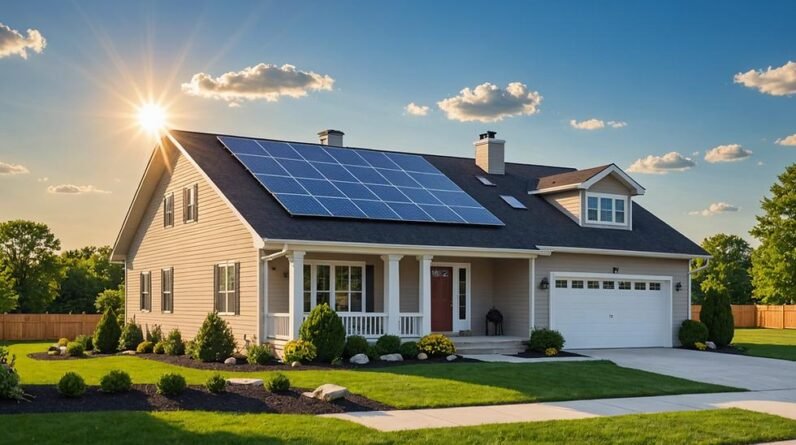
Benefits of Solar Panels for Your Home
What if your home could generate some of the electricity it needs directly from sunlight? Solar panels give homeowners an opportunity to produce renewable electricity, reduce their reliance on traditional utility power and potentially lower their monthly energy costs.
One of the key benefits of solar panels for your home is that they can significantly reduce your electricity bills. When you generate your own electricity, you are less reliant on traditional energy sources, leading to substantial savings over time. These benefits of solar panels for your home make them an increasingly popular option for energy-conscious homeowners.
As electricity prices, energy needs and environmental concerns continue to influence household decisions, residential solar power has become an option worth exploring. A properly designed solar energy system can provide financial and practical benefits over many years, although the results depend on your location, roof, electricity usage and local utility policies.
So, what are the main benefits of solar panels for your home? Let’s look at how residential solar works, the potential savings and the reasons more homeowners are considering this renewable energy source.
Understanding the benefits of solar panels for your home can help you make an informed decision. With rising electricity costs and the need for sustainable energy sources, exploring these benefits is crucial.
1. Reduce Your Monthly Electricity Bills

One of the biggest advantages of installing solar panels is the potential to reduce your household electricity bills.
The benefits of solar panels for your home extend beyond just financial savings; they contribute to a more sustainable and eco-friendly lifestyle.
Solar photovoltaic (PV) panels convert sunlight into electricity that can be used to power appliances, lighting, heating and cooling equipment, and other household devices. When your system generates electricity during the day, your home can use that power instead of purchasing the same amount from your utility company.
The amount you save depends on several factors, including:
- The size and efficiency of your solar panel system.
- How much electricity your household consumes.
- The amount of sunlight your roof receives.
- Your electricity rates and utility billing arrangements.
- The upfront cost and financing terms of your system.
Solar panels do not automatically eliminate electricity bills. You may still have fixed utility charges, and you may need to purchase electricity when your panels are not producing enough power. However, generating some of your own electricity can reduce your dependence on grid-supplied energy.
2. Generate Your Own Renewable Electricity
Embracing the benefits of solar panels for your home not only reduces your energy bills but also empowers you with energy independence.
Solar panels allow homeowners to turn sunlight into usable electricity through a process known as the photovoltaic effect.
Solar cells inside the panels absorb sunlight and generate direct current (DC) electricity. An inverter then converts this electricity into alternating current (AC), which is the type of electricity normally used by household appliances.
Your solar-generated electricity can help power everyday household equipment, including refrigerators, televisions, computers, lighting, washing machines and kitchen appliances.
Generating electricity at home gives you greater control over where some of your energy comes from. Instead of relying entirely on electricity supplied by the utility grid, you can produce a portion of your household power yourself.
3. Reduce Your Environmental Impact

Another important benefit of solar energy is its potential to reduce the environmental impact associated with electricity generation.
The environmental benefits of solar panels for your home include reducing greenhouse gas emissions, which is essential for combating climate change.
Traditional electricity generation can involve burning fossil fuels such as coal and natural gas. These activities release greenhouse gases and other pollutants. Solar photovoltaic systems generate electricity from sunlight without combustion during operation.
By replacing some electricity that would otherwise come from fossil-fuel generation, a home solar system can help reduce the emissions associated with household electricity use.
The overall environmental benefit depends on the electricity sources in your region, the performance of your system and the materials and energy used to manufacture and install the panels.
For homeowners interested in making more sustainable choices, solar power can be one practical way to support a cleaner electricity supply.
For anyone considering sustainable living, the benefits of solar panels for your home are clear and compelling.
4. Become Less Dependent on Your Utility Company
Moreover, the benefits of solar panels for your home can enhance the overall value of your property, making it a wise investment.
Producing electricity at home can reduce the amount of power you need to purchase from your utility provider.
This can be particularly useful when electricity prices change or when household energy consumption increases. A suitably sized solar system can supply a portion of your electricity needs and make your household less dependent on grid electricity during sunny periods.
However, most grid-connected solar homes remain connected to their utility provider. They may still rely on the grid at night or when their system is not producing enough electricity.
If you want to use more of your own solar electricity after sunset, you can consider adding a solar battery. A battery stores some of the electricity generated during the day so that it can be used later.
5. Earn Credits for Excess Solar Electricity
Sometimes a solar energy system generates more electricity than a home needs at a particular moment. Depending on your utility provider and local regulations, excess electricity may be sent back to the grid.
Some utilities offer net metering or other forms of export compensation. Under these arrangements, homeowners may receive credits or payments for electricity supplied to the grid.
The value of exported electricity is not the same everywhere. Compensation rules, eligible system sizes, billing periods and payment rates vary by state and utility company.
Before installing solar panels, contact your electricity provider to understand its current solar interconnection and excess-generation policies. This will help you estimate how much financial value your system could provide.
6. Make Better Use of Your Roof Space
Another of the compelling benefits of solar panels for your home is the long-term savings on energy costs that can be achieved over the lifespan of the system.
For many homeowners, the roof is an underused space that can serve a practical purpose beyond protecting the house from the weather.
If your roof has suitable structural condition, orientation and sunlight exposure, it may be a good location for solar panels. A professional assessment can help determine whether your roof is suitable and how much electricity a system could generate.
Roof direction, shading from trees or nearby buildings, roof pitch and local weather conditions all influence solar production. A south-facing roof can often be advantageous in the United States, but other orientations may also work well depending on the location and system design.
7. Support Long-Term Household Energy Planning

Solar panels are designed to operate for many years. This makes them a long-term household investment rather than a short-term energy purchase.
Many solar modules carry performance warranties lasting around 25 years, although warranty terms differ between manufacturers and products. Actual system lifespan and performance depend on equipment quality, installation, maintenance and environmental conditions.
When evaluating a solar installation, consider the total cost of the system, financing charges, inverter replacement, maintenance requirements and expected electricity production over time.
Comparing these costs with your expected utility bill savings can help you decide whether solar power makes financial sense for your home.
8. Combine Solar Panels with Battery Storage
Solar panels can also be combined with a home battery to make better use of the electricity generated during the day.
Without battery storage, a grid-connected home generally uses solar electricity as it is produced and obtains additional electricity from the grid when necessary. With a battery, some excess daytime generation can be stored for use during the evening or at other times when solar production is low.
By maximizing the benefits of solar panels for your home, you can enjoy clean energy and potential savings simultaneously.
A battery may also provide backup power during certain outages, depending on the system design, battery capacity and whether the equipment includes suitable backup functionality.
Solar batteries add to the installation cost, so homeowners should compare the additional expense with the value of greater energy flexibility and potential backup power.
9. Understand the Costs and Limitations Before Installing Solar
Although residential solar offers several advantages, it is important to understand the costs and practical limitations before making a decision.
Ultimately, understanding the full range of benefits of solar panels for your home can guide your decision-making process effectively.
Solar panels do not produce the same amount of electricity at all times. Output changes with sunlight, season, weather, shading and panel orientation. Your household may still need electricity from the grid, particularly at night or during periods of low solar production.
Other considerations include:
- Initial investment: Purchasing and installing a solar system can involve a significant upfront cost.
- Roof suitability: Older roofs, structural problems and heavy shading may affect installation decisions.
- Maintenance: Panels and other system components may need periodic inspection and maintenance.
- Utility rules: Interconnection requirements and compensation for excess electricity vary by location.
- Incentives: Federal, state and local programs can change. Check current eligibility and rules before including incentives in your financial calculations.
Getting multiple quotes from qualified installers and reviewing the expected system production can help you make a more informed decision.
With the increasing awareness of the benefits of solar panels for your home, more homeowners are making the switch to renewable energy.
Is Installing Solar Panels at Home Worth It?
For many households, solar panels can be a worthwhile investment when the system is properly designed and the financial numbers make sense.
Homes with suitable roofs, good sunlight exposure and relatively high electricity costs may have more opportunities to benefit. However, the best choice depends on your household’s electricity consumption, installation costs, financing arrangements and local utility policies.
Rather than relying on general claims about guaranteed savings, ask installers for a detailed estimate based on your actual electricity usage and property. Compare the expected annual production, total installation cost and likely bill savings before making a decision.
Solar energy will not be the perfect solution for every home, but it can provide a combination of renewable electricity, potential financial savings and greater control over household energy use.
Frequently Asked Questions About the Benefits of Solar Panels
With numerous benefits of solar panels for your home, it’s easy to see why they are becoming a common choice among environmentally conscious consumers.
1. What are the main benefits of solar panels for your home?
The main benefits include the potential to reduce electricity bills, generate renewable electricity, lower reliance on grid power, reduce emissions associated with electricity use and make use of available roof space.
2. Do solar panels eliminate your electricity bill?
Not necessarily. Solar panels can reduce the amount of electricity you purchase, but fixed utility charges and electricity used when solar production is insufficient may still appear on your bill.
3. Can solar panels generate electricity on cloudy days?
Yes. Solar panels can still generate electricity in cloudy conditions, although production is generally lower than under direct sunlight. The amount depends on cloud cover, panel technology and other conditions.
4. Can homeowners sell excess electricity generated by solar panels?
Some utility providers offer credits or payments for excess electricity sent to the grid. The arrangements and compensation rates depend on local regulations and the utility provider.
5. How long do residential solar panels last?
Many solar panels are designed to operate for 25 years or longer. Manufacturers commonly offer long-term performance warranties, but actual lifespan and output depend on the product, installation and operating conditions.
6. Do solar panels work during a power outage?
Most standard grid-connected solar systems automatically shut down during a grid outage for safety reasons. A system with appropriately configured battery storage and backup equipment may provide electricity to selected household circuits during an outage.
7. Are solar panels environmentally friendly?
Solar panels generate electricity without burning fossil fuels during operation. Manufacturing, transportation and disposal still have environmental impacts, but solar power can reduce emissions when it displaces more carbon-intensive electricity generation.
Final Thoughts
Installing solar panels can give homeowners an opportunity to generate renewable electricity, reduce their reliance on traditional utility power and potentially lower their energy expenses.
The benefits of solar panels for your home are numerous and impactful, making them a viable option for the future of energy consumption.
The most important step is to understand your household’s electricity needs and evaluate the costs and benefits of a system designed for your property. With careful planning, residential solar can become a valuable part of a more efficient and sustainable home.
Ultimately, the benefits of solar panels for your home will be felt for many years, ensuring a sustainable and cost-effective energy solution.